
Five minutes into American Hustle, I realized I probably was not going to like the film. I stuck around for the next two hours, but the film never grabbed me. It has been praised by critics, but I consider myself kin to the many other viewers who left the film feeling apathetic. Us emotionless millions, unmoved by a film with such heavyweights, such ACTING — we are legion. Continue reading “American Hustle”
Doggie B
[Normally, I’d have a trailer for a movie here. Not this time. You want to see a trailer for Doggie B, you find it without my help.]
Netflix continues to impress me with its selection of terrible movies to stream. Thanks to an unsustainable subscription model, the site is packed full with the dregs of Hollywood. Once, many years ago, I gave the local ABC affiliate here in New York shit for purchasing cheap movies to show late at night. Well, whoever that poor programming director happened to be at the time, I have to apologize. You brought me such gems as The Hillz and Theodore Rex, but as bad as those movies are, they are Oscar contenders compared to Doggie B.
The Cross
Come on, atheists. You’re protesting a cross in the 9/11 Museum? I know you don’t believe God can hear you, but you realize the rest of us can, right?
— Stephen Colbert in his opening routine, March 10th
Colbert had some fun at the expense of David Silverman and American Atheists, the non-profit Silverman runs. American Atheists filed a lawsuit to have a steel cross that was cut from the wreckage at Ground Zero removed from the memorial on site. The lawsuit stems from the fact that the site is public property owned by the Port Authority of New York and New Jersey, and the memorial receives public funding. The case is hardly cut and dry, though. If it were, there would be little argument. The cross has no business in a public facility, as its mere presence is an endorsement of religion. There are plans for the site to include other religious symbols, as well, but none on the scale and prominence of the cross. Continue reading “The Cross”
The Shitty Movie Sundays Awards
The Academy Awards were last night. But more importantly, I handed out the Second Annual Empty Balcony Awards for Movies I Saw From Last Year. Those awards are self-explanatory, but a quick rundown is in order. I did not see all the films that were nominated for Oscars. In fact, I only saw a handful, so there’s no way I could offer an honest opinion on the winners and losers. For example, the top categories are best picture, director, the acting categories, and the two screenplay categories. Of all the winners, the only film from last year that I saw was Gravity, for which Alfonso Cuarón won best director. So, I made my own awards. Cuarón didn’t win best director in my awards, but he was nominated, so that’s an honor, I guess. Continue reading “The Shitty Movie Sundays Awards”
The Second Annual Empty Balcony Awards for Movies I Saw From Last Year
When the Oscars aired last year, I was surprised to find that I had not (at the time) seen a single film that was nominated in any of the top categories. Because of that, I felt I couldn’t offer an opinion on how the awards were dished out, nor participate in Oscar night fun. But, I had seen quite a number of movies from the previous year, and I wanted to weigh in on some level. And lo, the Empty Balcony Awards were born. Continue reading “The Second Annual Empty Balcony Awards for Movies I Saw From Last Year”
Europa Report
Europa Report is a film that exists on the verge of being good. There is certainly a good premise behind the story, but the film falls just short of telling that story effectively. Continue reading “Europa Report”
Being Watched
In public spaces in the United States, there is no expectation of privacy (with some caveats, of course). Conversations we have, things we do, while out in the wide-open spaces under the sky are free to be observed and recorded by anyone watching. That’s a little creepy, but something we have grown accustomed to over the years, as security cameras have become ubiquitous. Continue reading “Being Watched”
The Yellow Sea
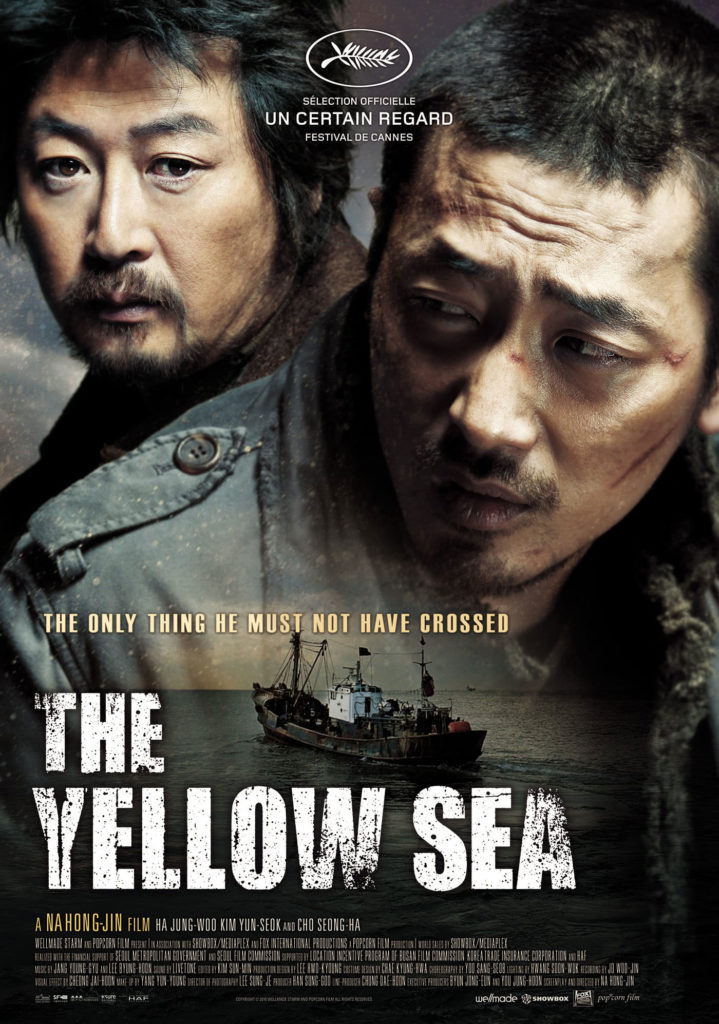 If you can follow the plot of The Yellow Sea, the Korean film from 2010 written and directed by Na Hong-Jin, then you must be Korean, or at least speak the language fluently. Those are the only reasons I can think of why so many western viewers online, including myself, found this flick’s plot to be confusing, at best, and impenetrable, at worst. The good news is that doesn’t matter. Normally, when a movie has a plot that I can’t follow, that is a bad thing. Not so with The Yellow Sea. About halfway through, I gave up on trying to keep track of all the twists and turns, and just sat back and enjoyed one of the best action films that has hit cinemas in this decade.
Gu-nam (Ha Jung-woo) has a problem. He’s an ethnic Korean born and raised in northern China, which has its disadvantages, apparently. He is what is known as a Joseonjok, a blanket term for ethnic Koreans in the country. In order to finance a better life, Gu-nam goes into debt with some local coyotes to arrange transportation to South Korea for his wife. Because the standard of living in South Korea is so much higher than in China, she should be able to work and send back enough money to Gu-nam to pay off the debt to the coyotes and finance a trip down to the peninsula for both Gu-nam and the couple’s young child. But, something goes wrong. Gu-nam’s wife has been in Seoul for months, and nary a check has arrived. On top of that, the coyotes want their cash. In desperate straits, Gu-nam agrees to be smuggled in to South Korea on a fishing boat, to carry out a hit for a Joseonjok gangster, with the understanding that the debt will be paid. Continue reading “The Yellow Sea”
Wake in Fright
I can get the heart of this review out of the way quickly. Wake in Fright is the best movie I have seen in at least the last couple of years. Directed by Ted Kotcheff and written by Evan Jones, Wake in Fright has an interesting history. From 1971, it was close to being a lost film for a long time, with the only known copy in existence of such poor quality that it was unfit for transfer to home media. Twenty years ago, Anthony Buckley, who edited the original film, began to search for an intact copy. After much effort, he succeeded. A restoration was finally undertaken in 2009, and the film was released to the general public once again. Continue reading “Wake in Fright”
Escape Plan
After a long lull in their careers, it’s refreshing to see Sly Stallone and Arnold Schwarzenegger unapologetically doing what they do best, which is killing people and blowing shit up, all for the benefit of the movie going public. I can’t speak for the rest of audiences worldwide, but I can attest that in the last thirty years, my tastes have grown more sophisticated, as has my expectation of believability in any film. Unless, that is, the movie is shitty. In a shitty movie, it’s okay for bullets to blow up gas tanks. In a shitty movie, it’s fine with me when bad guys toting M4 carbines can’t hit the good guy, while, at the same time, the good guy is picking them off with little problem using a handgun. In high-falutin’ cinema, it’s bad form to end the climactic action scene with a cheesy one-liner. But in a shitty movie, that’s okay! Continue reading “Escape Plan”