
This is a little movie. Not in length. A viewer will feel all 85 minutes of its running time. Rather, The Marshes is a movie filmed with what looks to be a miniscule budget, so writer/director Roger Scott kept everything hemmed in. The film was shot in the Australian wilderness, and sets consist of a small campground and couple of spots for some bloody stuff. There’s not so much as a shack or a hunting blind to be seen anywhere once the production hits the boonies. They left only footprints. Continue reading “The Marshes”
Interview with the Vampire: The Vampire Chronicles
Here’s an old review I wrote for an abandoned month of Tom Cruise reviews. It slots into the Horrorshow quite well:
What a clumsy title. The title of this film is up there in clumsiness with Ballistic: Eks vs. Sever, The Hunger Games: Mockingjay – Part 1, and Lara Croft Tomb Raider: The Cradle of Life. It can’t be too much longer before Hollywood shoves out a film that has two colons in the title, right? Of course, Hollywood has nothing on the Japanese, who are absolute virtuosos at stringing together nonsense titles. The anime realm brought us The Super Dimension Fortress Macross: Do You Remember Love?, a film which showed us that J-pop is a weapon of mass destruction, and Evangelion: 1.0 You Are (Not) Alone. Not too long ago I saw a Japanese detective flick from the 1960s titled Detective Bureau 2-3: Go to Hell Bastards! It was every bit as good as it sounds. But, while I jest, potential viewers should not let the awkward title steer them away from Interview with the Vampire. Continue reading “Interview with the Vampire: The Vampire Chronicles”
Presented Without Comment
Invasion from Inner Earth, aka Hell Fire, aka They
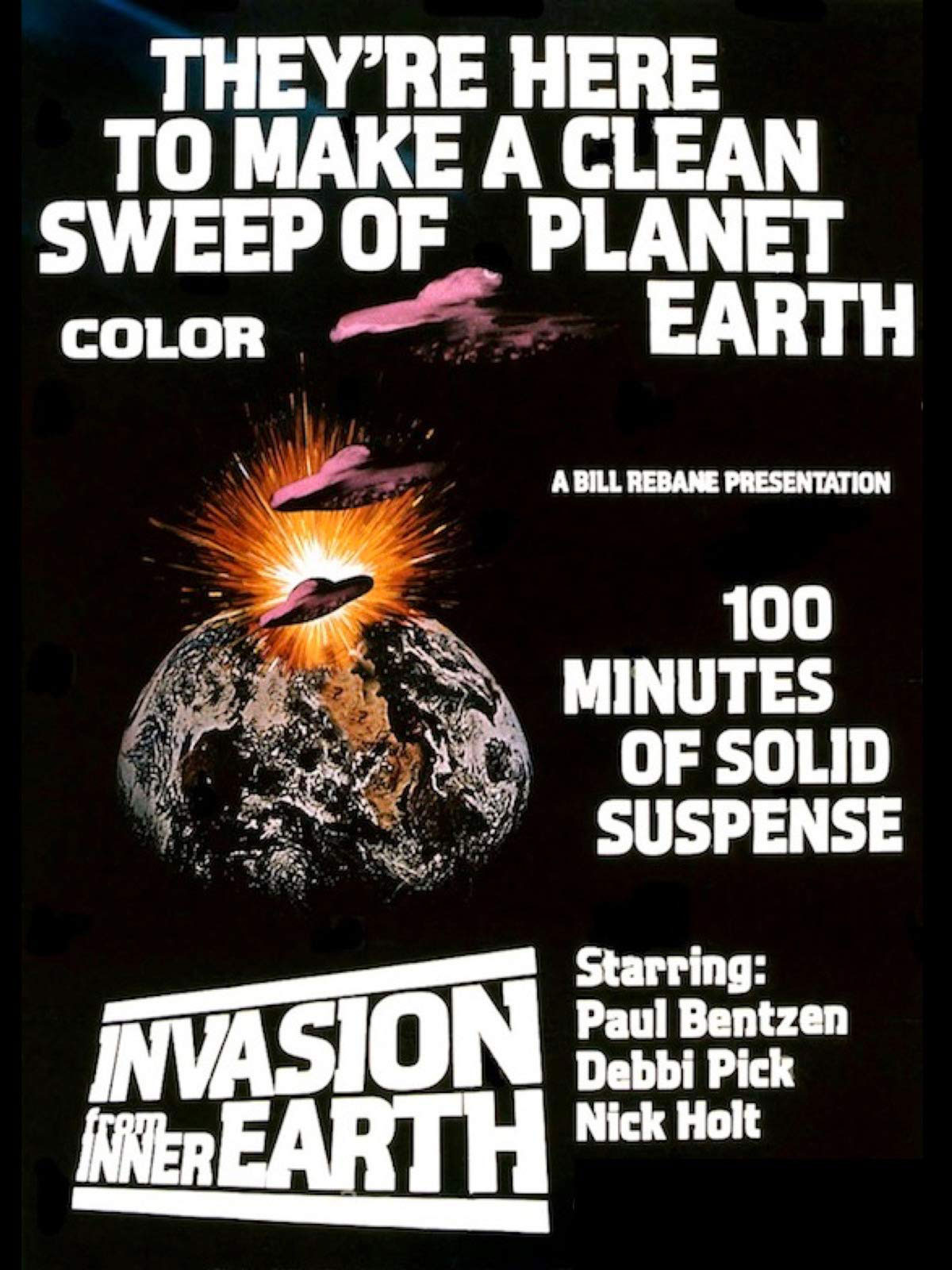 Once upon a time, in the far distant past, AD 1974, filmmaker Bill Rebane asked a simple question. “What if I made an alien invasion movie without the aliens?” I’m joking, but at some point during production, Rebane (who has graced the Horrorshow in the past) had to have noticed that all the action in his film was taking place hundreds of miles away from the plot. What we’re left with are five 20-somethings in an isolated cabin in northern Manitoba, whiling away the time by playing with a ham radio and eating beans. It turns out that it’s important for a filmmaker to place their characters near the action in a film, so that something, anything, happens to ease the pain of the audience. Who knew?
Working from a screenplay by Barbara J. Rebane, Invasion from Inner Earth (also released as Hell Fire and They — titles that make as little sense as Invasion from Inner Earth) starts off slowly, and that’s how the whole thing goes. Continue reading “Invasion from Inner Earth, aka Hell Fire, aka They”
Empire of Ash III, aka Last of the Warriors
What a gloriously stupid movie. It has it all. Barely sensible plot, bad dialogue, bad acting, cheap filmstock, gratuitous nudity, and all the other accoutrements that make shitty cinema great. Every time the flick threatens to drag, directors Michael Mazo and Lloyd A. Simandi throw in a gunfight and some explosions, and all is well with the world once again. Empire of Ash III is no rare gem, but we shitty movie fans love it when filmmakers just throw shit at the wall to see what sticks. Continue reading “Empire of Ash III, aka Last of the Warriors”
So Majestic

Hard Night Falling, or, Die Hard at a Villa
Let’s hear it for the Italian shitty movie industry. Decades-long and still going strong, when one has a yen for a ripoff of one’s favorite Hollywood action flicks, look no further than Italy.
Today’s shitty Italian ripoff is Hard Night Falling, from 2019. Dolph Lundgren plays Michael Anderson, an Interpol agent who is meeting his wife and daughter (Sinne Mutsaers and Chiara Arrigoni) at a villa owned by businessman Frank (Andrea Scarduzio), during a swanky dinner party. Things are a bit rocky in the Anderson household, and it has been many years since Michael has seen his daughter. Continue reading “Hard Night Falling, or, Die Hard at a Villa”
I’ve Never Liked Robin

Chain Gang Women
We have been hornswoggled. We have been bamboozled. Hoodwinked. Swindled. Tricked, and defrauded. A movie with a title such as Chain Gang Women has obligations to be met. There needs to be women. On a chain gang. And there should be, at minimum, two nude shower scenes. A film with a title like this owes its audience genuine exploitative sleaze. This flick is that, to be sure, but to an inadequate extent. Nor does that change the fact that viewers are the victims of shameless misdirection in the pursuit of drive-in dollars. I shall explain. Continue reading “Chain Gang Women”
Escape Plan: The Extractors
Sylvester Stallone has been dipping into the China market, of late. This isn’t anything new, really. For years now, Hollywood has been tweaking their films to satisfy the demands of the Chinese government and gain access to their huge market, with mixed results. There’s no tweaking in the latest Escape Plan flick, however. This film looks made for the Chinese market, and if anything comes of it in other markets, that’s just gravy for this film’s 48 credited producers. Seriously, 48! I counted nine production company logos at the start, eating up 1:45 of this flick’s 96-minute running time. Major League Baseball has shorter commercial breaks between innings. Continue reading “Escape Plan: The Extractors”