Policewomen, or, Misogyny: The Movie

Sondra Currie stars as Lacy Bond, and the last name is no coincidence. As much as Policewomen, the 1974 flick from writers Lee Frost and Wes Bishop, and also directed by Frost, is an exploitation buddy cop crime women in prison gangster martial arts LA story, it’s also a James Bond ripoff. And, unlike all the Bond films, the camera keeps rolling during the naughty bits in this shitty gem.

Policewomen opens with a jailbreak. Despite the ass-kicking efforts of Lacy Bond, two inmates, Pam and Janette (Jeannie Bell and Laurie Rose) stage a spectacular escape. They get naked while they’re doing it, too, staking this flick’s gratuitous nudity claims early (this film actually has much less skin than I expected). For her above and beyond efforts, Lacy is recruited to do some plainclothes work. The squad she joins is investigating a gang led by Maude (Elizabeth Stuart, in her only appearance), an aged, foul-mouthed, dried up, wrinkly old prune of a godfather. Before we get to Maude and her gang, though, I need to write about Lacy Bond’s new colleagues. Continue reading “Policewomen, or, Misogyny: The Movie”
No Escape No Return, or, Three Riggses and No Murtaughs

The early 1990s were very much a weird time. It was an extended hangover from our experience of the ’80s, and movies reflected that. As important as music was in redefining style, and giving the younger Gen-X slackers senseless purposelessness, there was still a fair amount of big hair and mullets out there alongside the flannels and unkempt coiffures. In shitty cinema, sharp suits, tight skirts, and cocaine were still the rage, while out in the real world, alternative rock had rediscovered heroin. Movies were playing a game of catch-up when it came to popular culture, resulting in some films looking like anachronisms.

1993 saw the release of No Escape No Return, a cheap buddy cop flick that takes all the well-worn clichés of the last decade-plus and stirs them into a shitty mush. Charles T. Kanganis handled writing and directing. More importantly, Joseph Merhi, a Shitty Movie Sundays Hall of Fame inductee, was one of the producers, adding this film to an impressive list of subpar accomplishments. Continue reading “No Escape No Return, or, Three Riggses and No Murtaughs”

Valkyrie

Sometimes big time actors put on their serious pants and play a Nazi-era German protagonist. I don’t know if ego or decades spent in a celebrity bubble deprive these actors of common sense, but these movies occasionally get made, and there’s always an A-lister out there willing to play one of the 20th century’s most notorious bad guys. In Valkyrie, the 2008 film directed by Bryan Singer, that A-lister was Tom Cruise.

Going over Cruise’s public persona is a waste of time, but I do remember hearing about this film back in the year it was released, and thinking Cruise must be delusional about the amount of leeway movie audiences are willing to give him. There is only one man in Hollywood who can play a good World War II German, and that man is Liam Neeson. With any other actor and any other character other than Oskar Schindler, a film is walking a fine line. To stumble means embarrassment, at best, and career-threatening ostracization, at worst. With a degree of difficulty that high, who in their right mind would choose to star in a film such as Valkyrie? King Mapother, that’s who. Continue reading “Valkyrie”

The Aftermath (1982)

Amazon Prime has a problem with dates on some movies. For films that have been re-released with a restored print or new cut, it’s not uncommon for them to use the date when the new print was released, rather than the year the film originally premiered. This caught me out with The Aftermath, which, according to Amazon, was released in 2018.

The print on Prime is close to pristine. Other than occasional pops and scratches, the picture is sharp and the colors are vibrant. Because of this, and the 2018 date attached to the film, I at first thought I was watching something fairly new. And it was a riot. From the cheap model work, the period costumes, the color reminiscent of a retro digital filter, the analog technology used in the sets, to the music and the cinematography, I thought I was watching a very clever recreation of a 1970s cheapie sci-fi flick or tv movie. Something inspired by Dark Star or any random Italian ripoff. Then I noticed Sid Haig, who plays the bad guy, and realized there was no way this movie was made in 2018. Continue reading “The Aftermath (1982)”

Jerry Maguire, or, Never Go Full Cute

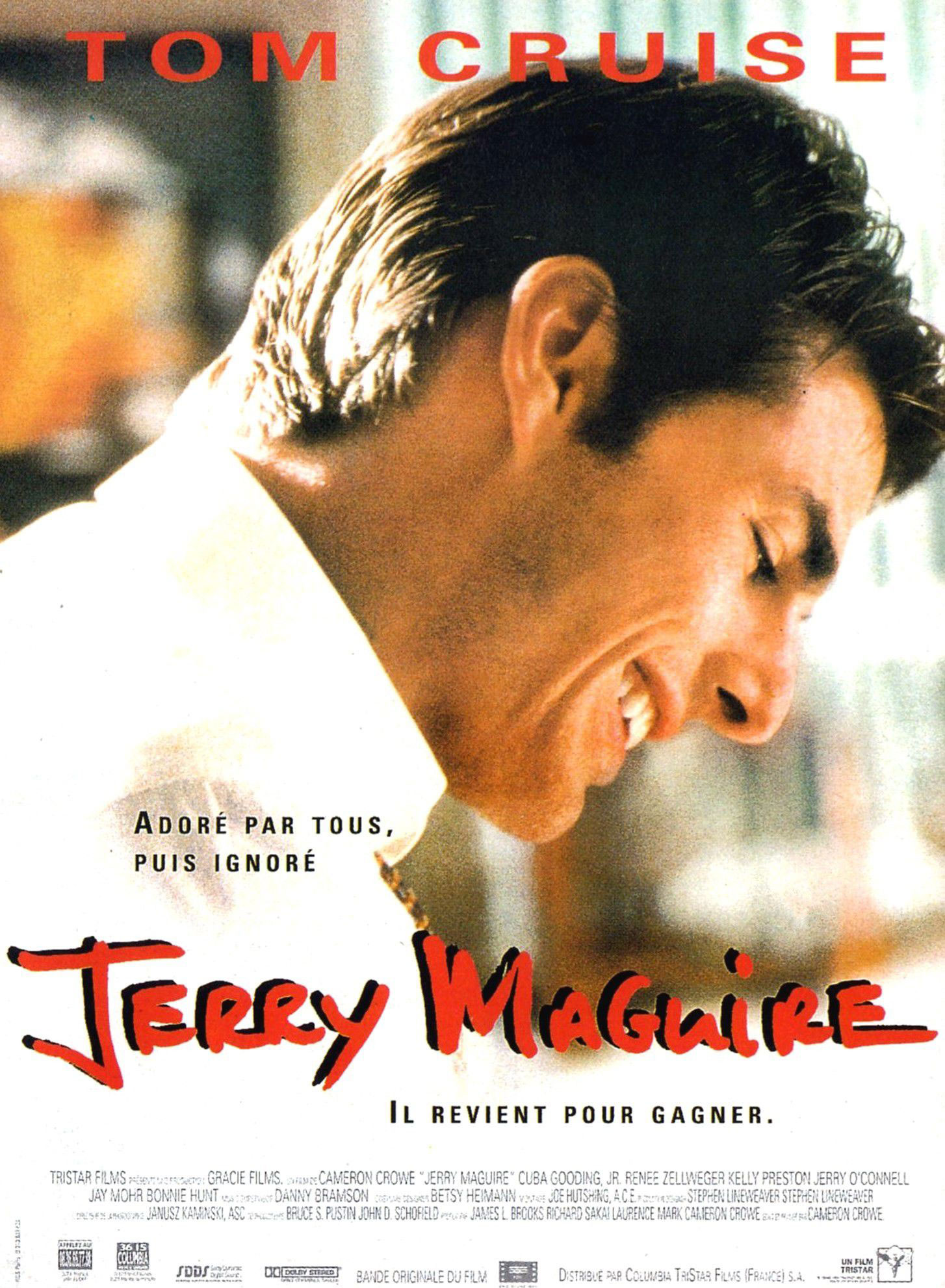
Jerry Maguire movie poster, in French!Cameron Crowe has made a number of films of note. His films consist of entertaining, escapist, happy storytelling that has about as many sharp edges as a bowl of jello. He made the type of films that challenge no assumptions, and throw in just enough emotion to tug on the heartstrings. The worst part about this is not all the squishiness, but the fact the only reasons his films arouse any emotional responses at all is because they are manipulative, reducing human emotion to a formula. Crowe doesn’t evoke emotions in a viewer — he extracts them.
At the start, Jerry Maguire, Crowe’s film from 1996, freewheels its way through the life of the titular character, played by Tom Cruise. He’s a sports agent, and his life is shown as one of glitz and glamour, right until the moment he finds himself the public spokesperson for clients in trouble with the law or in trouble with the media. (Is there really any difference when it comes to sports?) Continue reading “Jerry Maguire, or, Never Go Full Cute”

Burnout

Scott (Mark Schneider), is a child of privilege. After he kills an old woman during an illegal street drag race, his hotshot father/lawyer gets the judge to merely suspend his license, rather than lock him away. This is not an auspicious start to the protagonist’s story in Burnout, the 1979 drag racing flick from writer/producer Martin J. Roseman and director Graham Meech-Burkestone. We’re supposed to be able to root for the hero in a film like this. There’s no hoping to see Scott’s redemption when he hasn’t had to suffer. It seems pretty tone deaf for 1979, much less today. Continue reading “Burnout”

Cocktail

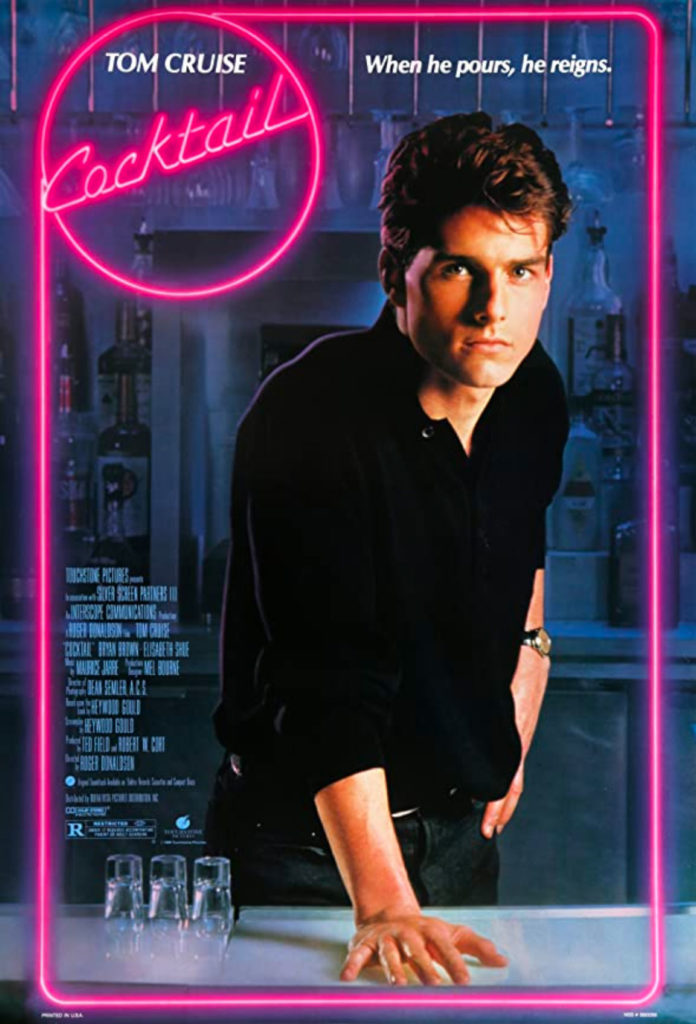
Cocktail movie posterHere’s another entry from the aborted Tom Cruise month, written back when I still lived in NYC:

What a putrid mess. Cocktail, the 1988 film from director Roger Donaldson, is about a bartender in New York City with big dreams. That’s just about every bartender in this town, at least before reality sinks its teeth in and, all of a sudden, a bartender’s 30s are looming large. I have a feeling that a large number of those involved in this flick have spent time slinging drinks. How in the world they screwed up a movie about a bartender is beyond me. But, Cocktail is only about a bartender in that the main character tends bar. It’s also a romance, and, near the end, takes a very dark dramatic turn that didn’t fit the film at all.

Tom Cruise plays Brian Flanagan. Brian just finished a hitch in the army and returns home to Brooklyn. Brian has a bit of an inflated opinion of himself. It’s hard to think of another explanation because, after he returns, he decides he wants a job on Wall Street so he can make a million bucks. Brian has no college degree or work experience in finance, but that doesn’t stop him. I’m actually impressed he managed to get job interviews. But, as anyone, anywhere, would expect, he doesn’t get a gig. As he’s walking along in Manhattan after his latest rejection, despondent, he notices a help wanted sign in the window of a bar, and is hired by cantankerous career bartender Doug Coughlin (Bryan Brown). Continue reading “Cocktail”