 The 1980s are a difficult time to explain to people who weren’t there. For the 20th century, every decade had a distinctive look and feel, right up until the late ’90s when everything cultural started to have a whiff of nostalgia. One can look at only a few seconds of a film from the 20th century and be able to tell which decade it came from. Meanwhile, here in this rotten century, nothing seems to have changed since the early 2000s. Fashion, music, movies…there are new names, but a unique, stylistic identity to the times we live in has been lost.
Back to the ’80s. Then was the culmination of decades of change, and the overarching theme seemed to be garishness. Bright colors everywhere (except in the home, which remained stubbornly brown), music with strange sounding instruments, big hair, and, as today’s movie shows, outfits that are beginning to look as bizarre as powdered wigs and pantaloons.
From 1989 comes Alien Private Eye, written, produced, directed, and edited by Vik Rubenfeld. Shot in 1987, but stuck in a can until it obtained a VHS release, Alien Private Eye is another film rescued from the approaching abyss by Vinegar Syndrome, who cleaned it up and released a Blu-ray in 2022. And it’s good they did. Before they ran this flick through the ringer, the only way to watch it were degraded VHS transfers uploaded to the tubes, and those are barely watchable, with fuzzy picture and muddy sound. Continue reading “Alien Private Eye”

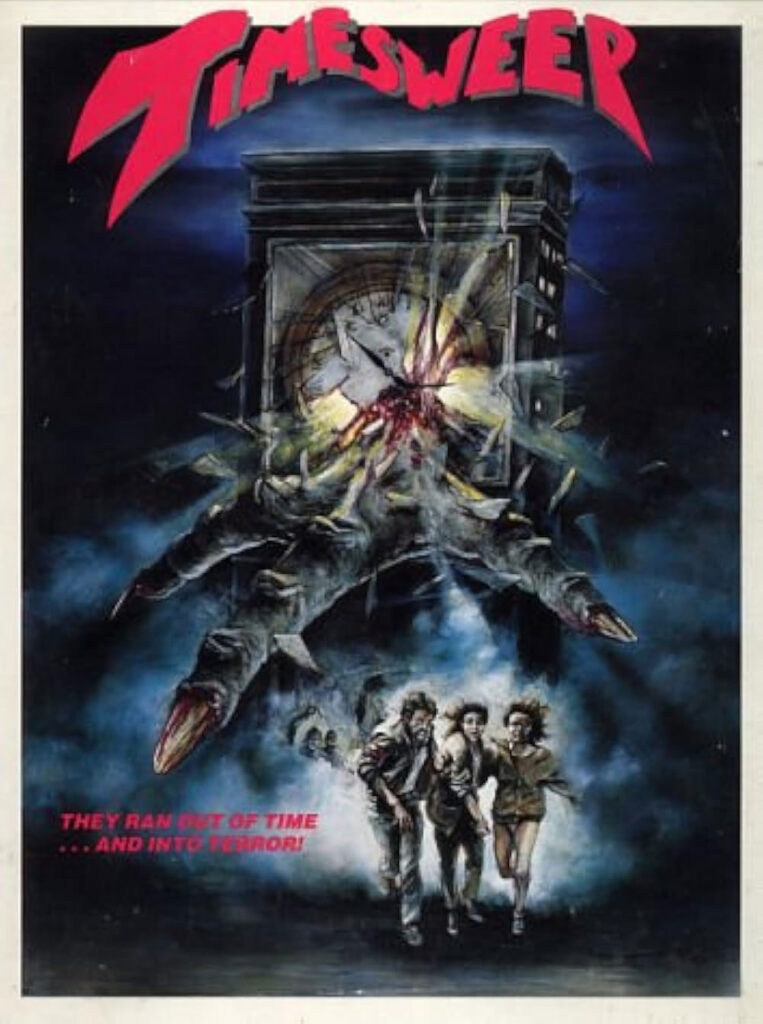 Someone out there, somewhere, owns the rights to Timesweep, the 1987 magnum opus from writer/director Dan Diefenderfer (screenplay credits were shared with Larry Nordsieck and John Thonen). As of this writing, Timesweep is nowhere to be found on streaming services, outside of the nooks and crannies where someone has uploaded an old VHS transfer. For shame. This movie is right up Tubi’s alley, and I’m sure whoever owns the rights could use the extra fifty bucks. Anyway…