
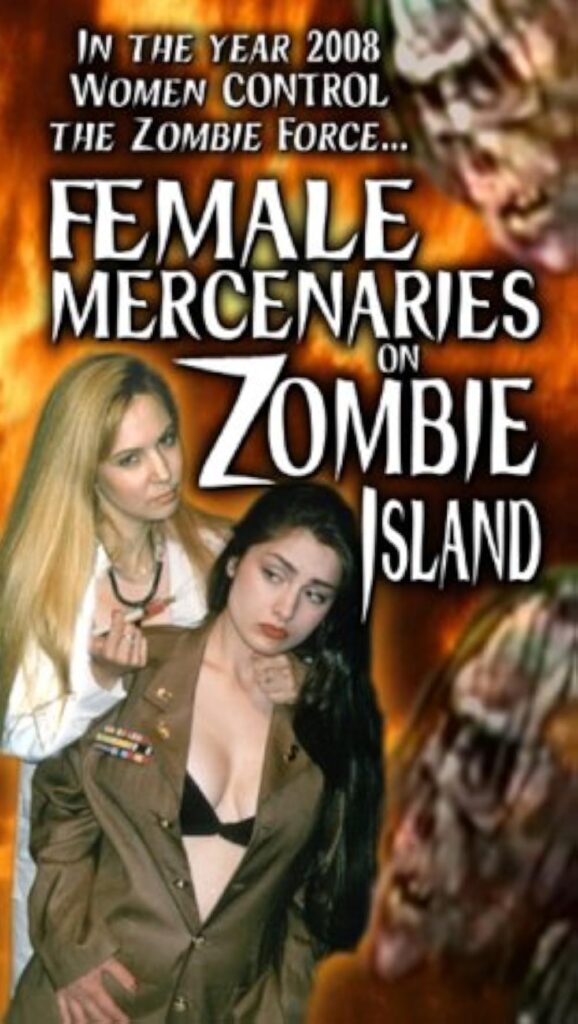
 Part shot-on-video horror, part fetish movie, one will be hard-pressed to see a more nonsensical, cheap, shameless, and proud bit of sleaze outside the porn industry, unless one is watching any of the other dozens of flicks from moviemaker Gary Whitson and W.A.V.E. Productions. What is W.A.V.E.? Why, only the finest film production company in all of New Jersey. W.A.V.E. is a bit difficult to explain, so here is a trailer for a documentary about them that sums it up well.
As mentioned in that trailer, W.A.V.E. movies defy criticism. They are what they are. I agree, but only to a certain extent. When judged objectively, against every other movie I’ve ever seen, I can write with simple clarity that Female Mercenaries on Zombie Island is a bad movie. It stinks. It’s awful. It’s a true bottom feeder cinematic experience. And it was never meant to be anything else. Should anyone care enough to do so, it would make for a wonderful case study into the psychological reasons behind why some people, those here at Missile Test included, like watching bad movies. I’ve never thought about the ‘why’ too deeply. I’m too busy enjoying myself. That lack of self-analysis is critical to enjoying this movie. It’s so bad that you can’t stop to think about it or it might provoke a personal crisis. Continue reading “Female Mercenaries on Zombie Island”
 In the decades since the 1989 release of Fatal Images, filmmaker Dennis Devine has staked out quite a place in low budget, trash horror cinema. Of the thirty-four directorial credits on his IMDb page that have viewer ratings, the average score is 3.8 out of 10. That’s pretty bad. Any single movie that garners a score that low is probably not worth the effort to watch, and that number covers Devine’s entire career. Some would say he should have thrown in the towel a long time ago, but shit on that. Devine is a filmmaker. It doesn’t matter that he makes crap. He makes movies, and no matter how bad they are, there is an audience of mutants out there who reject force fed studio movies — who experience culture outside the big corporate stranglehold on media. Sure, his movies stink. But every blown line, every plot hole, every frame of bland, desaturated magnetic video is a ‘fuck you’ to the moneyed gatekeepers of cinema.
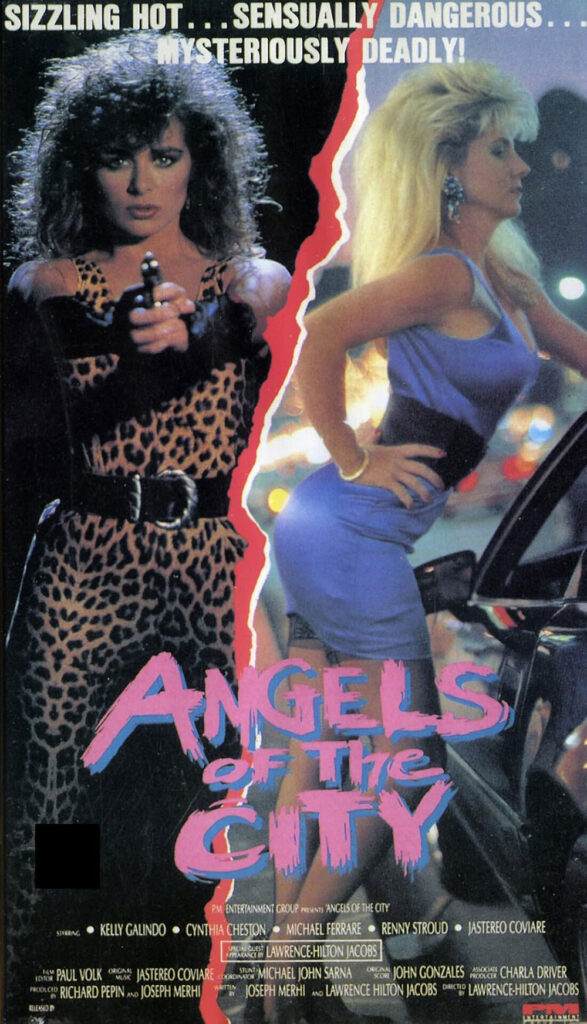 1989 was a banner year for producers Richard Pepin and Joseph Merhi. After a falling out with Ronald Gilchrist at City Lights Entertainment, the two formed PM Entertainment and began cranking out wonderfully inept direct-to-video movies. They released seven movies that first year, and distributed two more. Three of those movies were ersatz neo-noir Los Angeles thrillers featuring Lawrence Hilton-Jacobs, whom older readers will remember as Freddie ‘Boom Boom’ Washington from Welcome Back, Kotter. The relationship with Hilton-Jacobs was so worthwhile, in fact, that PM tapped him to direct. Written alongside Raymond Martino and Merhi, Hilton-Jacobs helmed Angels of the City, the story of a sorority initiation gone wrong.