
 Television is a tough racket. Just ask the employees of WBS TV. In the future, the year 2072, to be precise, WBS has a hit show on their hands. It’s called The Danger Game, where contestants are hooked up to a machine that pumps visions of bloody torture directly into their brains. If they endure the torture without panicking, they win. It’s a successful show for the discerning TV consumer of the dystopian future, but it’s still getting beaten in the ratings by Kill Bike — a show featuring riders on motorbikes engaging in some poorly filmed jousting.
The mysterious head of WBS, Sam (Giovanni Di Benedetto), has a new idea for a show that should get WBS back on top of the ratings. Essentially, WBS is going to steal the idea of Kill Bike, but WBS will increase the stakes. The contestants will all be convicted murderers, and they will battle to the death in the famed Coliseum of Rome.
The New Gladiators was released in 1984, and is part of the wave of cheap Italian sci-fi that found inspiration following the successes of the Mad Max films and Escape from New York, among many others. This particular film, from famed b-movie auteur Lucio Fulci, borrows from those two films, while still finding enough room to cram in heaping amounts of Rollerball, Blade Runner, and A Clockwork Orange. Most impressively, Fulci was able to reach forward through time and steal ideas from The Running Man (all joking aside, the similarities are enough that I have to think the people behind The Running Man were Fulci fans). Continue reading “The New Gladiators, aka Warriors of the Year 2072, aka I guerrieri dell’anno 2072”
 How presumptuous of me. I didn’t realize how classic this film was when I decided to watch it for a review. How does one review an acknowledged work of art? What more could I add to the conversation but my own ignorance? Academic papers have been written about this movie. In contrast, I have no credentials or expertise. I have never been employed as a film critic. This film, and its potential viewers, do not need me to affirm that it is indeed an indispensable piece of cinematic history. Were I to point out flaws or even offer gentle criticism, it could be dismissed out of hand as the scribblings of an amateur. That’s how good The Third Man is.
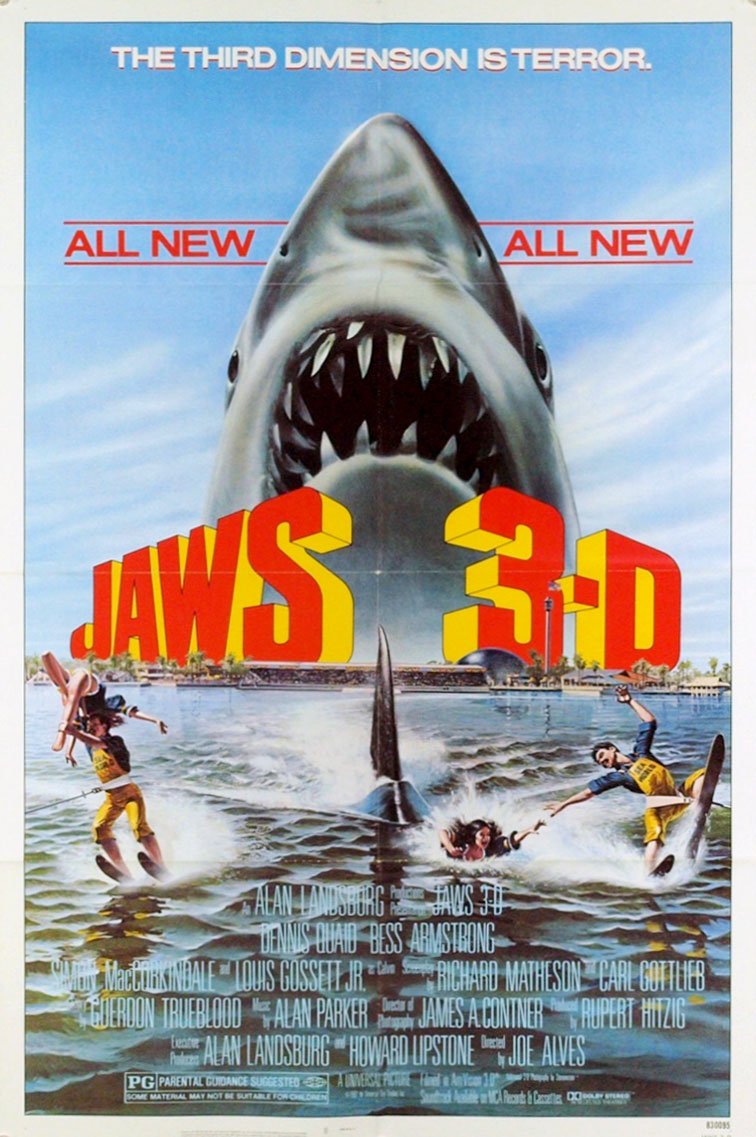 What a putrid mess. Jaws 3-D has about all the care one would expect from a film that was originally pitched as Jaws 3, People 0. That’s right. This movie, the second sequel to a great film that redefined the industry’s business model, was planned as a spoof flick. Had that film been made, it would probably have been no better than Airplane II: The Sequel, but could not have been much worse than what actually came to be made.