The Bodyguard, aka Bodyguard Kiba

Once upon a time, Sonny Chiba starred in a film adaptation of Bodyguard Kiba, a popular manga by Ikki Kajiwara. Chiba played the titular Kiba, who offers his services to anyone willing to expose crime and corruption. Perhaps, with Kiba’s protection, his clients will live long enough to see justice done.

As happened quite frequently with movies and TV shows from overseas, an American distributor got ahold of the rights, and released a bastardized version here in the States. Bodyguard Kiba became The Bodyguard; the name of Kiba’s character was changed to ‘Sonny Chiba,’ so the flick now features Sonny Chiba playing Sonny Chiba; and ten minutes of new footage shot in Times Square, that has nothing to do with the rest of the film, was added at the beginning. Oh, and the film opens with a reading of Ezekiel 25:17, just like Jules Winnfield says it early in Pulp Fiction, misquote and all. (The more genre films from the 1970s I see, the more I see where Quentin Tarantino found his influence. In fact, it seems as if his entire career has been remaking the movies he saw in his adolescence, bringing a high sheen to exploitation cinema. But, that’s an article for another day.) Continue reading “The Bodyguard, aka Bodyguard Kiba”
Virus (1999)

Once upon a time, the moviegoing public wasn’t assaulted by an endless stream of comic book movies from Marvel and DC. Back in the dark days of 1999, the Batman cinematic franchise was on life support after Joel Schumacher finished with it, and Marvel’s properties had been farmed out to Sony. The only two movies of any significance based on comics that year was Mystery Men, which was a big budget flop, and Virus, which was an even bigger big budget flop. Both of these titles came from Dark Horse Entertainment, and may have a lot to do with the slow pace of further adaptations from the Dark Horse stable, when compared with what Marvel and DC are doing. Continue reading “Virus (1999)”

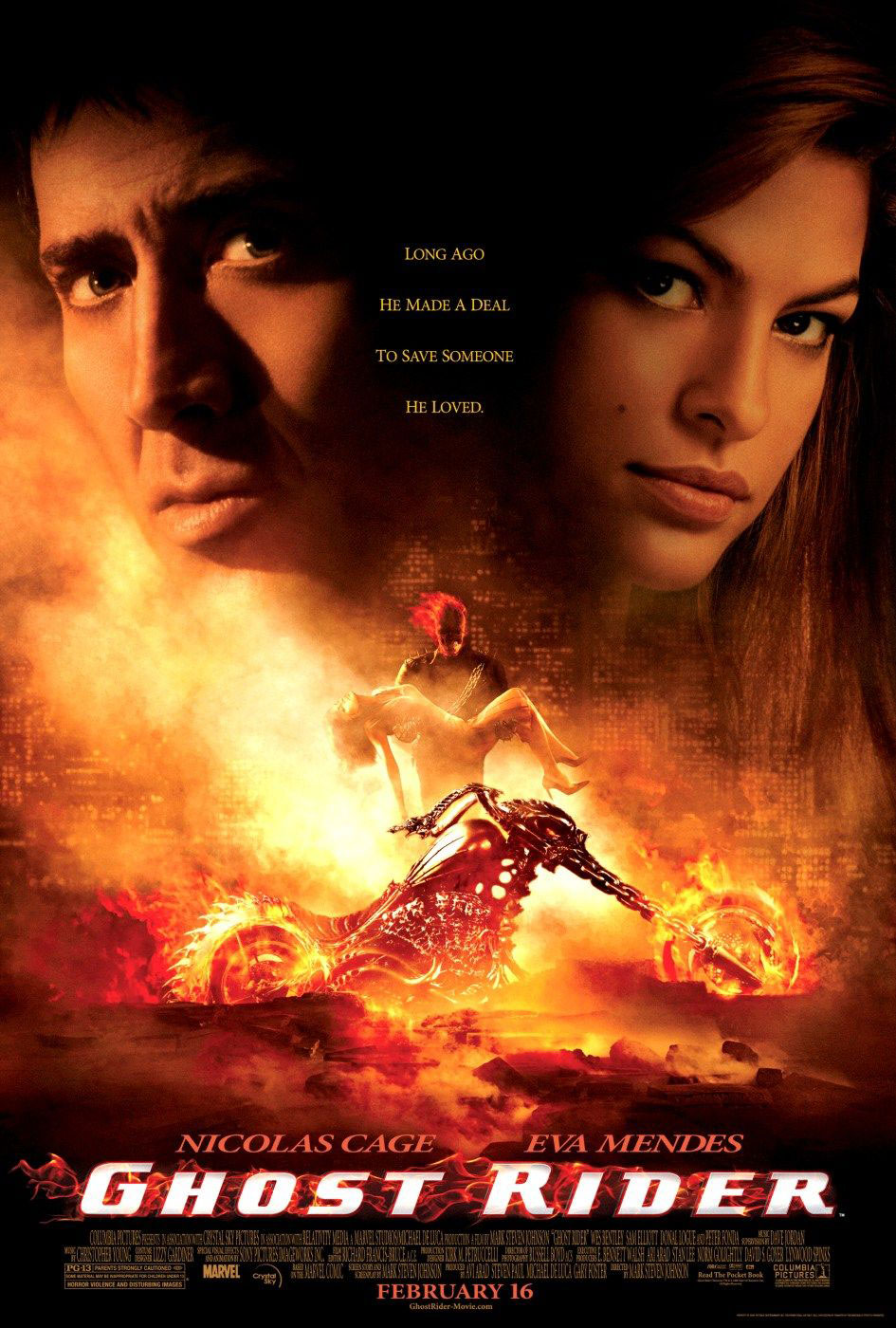
Ghost Rider

Half-baked idea: A remake of Apocalypse Now with Nicolas Cage starring in four of the most prominent roles. De-aged, he plays Captain Willard, dancing and twirling, drunk on expensive cognac in Saigon while waiting for a mission and hurting himself. As in the original, it would be an improvisational tour de force, perhaps ending in something more outrageous than a shattered mirror and a bloody hand. Either way, he’d be naked.
Later, Cage appears as Colonel Kilgore. “I love the smell of napalm in the morning. BOOYAH!! Let’s do this!” Then he hops onto a surfboard and paddles out into the glorious six-foot swirls, mortar and artillery shells fountaining the sea around him.

At Kurtz’s compound, a long-haired, bedraggled Cage comes out from behind the menacing gathering of Montagnard fighters, cameras hanging from his chest, guiding Willard and company in to dock, haranguing them with tales of Colonel Kurtz’s god-like prowess.

Finally, of course, is Cage as the crazy Kurtz himself, a study in pre-explosive tension, conflating poetry and dime-store philosophy in a hopeless attempt to reconcile his conscience with the things he has done. Continue reading “Ghost Rider”

Officer Downe

Not all comic book adaptations feature superheroes and supervillains chasing down the one mysterious MacGuffin that can either save or destroy the universe. Sometimes, all a comic book hero wants to do is clean up the streets of the big city.

Part Robocop, part drive-in homage, and part splatterfest, Officer Downe is the cinematic adaptation of the comic of the same name from writer Joe Casey and artist Chris Burnham. Casey also penned the screenplay for Officer Downe, while directing duties were handled by Shawn Crahan. If that name is familiar to some of the Loyal Seven readers, that’s because Crahan’s day job is as a member of heavy metal group Slipknot. Other members of the band get in on the fun as extras and minor characters. Continue reading “Officer Downe”

Atomic Blonde

Atomic Blonde is an aggressive title for a movie. By that, I mean it’s the type of title that can make a viewer immediately prejudge a film. I’m guilty of that. My expectations going into this film were that, at best, it would be a mildly entertaining, yet brainless, action flick. I was hoping for a shitty film, but was prepared for a just a plain old bad one. But, just as one shouldn’t judge a book by its cover, the same applies to film titles. Continue reading “Atomic Blonde”

Judge Dredd

Judge Dredd, the comic sprung from the minds of writers John Wagner and Alan Grant, has perhaps the most fully realized fictional universe in all of human storytelling. Every week since the late 1970s, with only a single exception, an issue of 2000 AD has been published with a Judge Dredd story inside. Since that time, the titular Judge Dredd and supporting characters have aged along with the rest of us, and the universe has retained the same continuity. Meanwhile, Judge Dredd’s superhero competitors retcon their universes ever time their sales need a punch up. DC recently carried out its 2nd reboot in five years. Continue reading “Judge Dredd”

Constantine, Rhymes with Tangerine

Back in 1993, DC Comics, under the direction of editor Karen Berger, took six of its mature readers titles and placed them under a new imprint — Vertigo. The Sandman, Swamp Thing, Doom Patrol (after a legendary run by writer Grant Morrison), Animal Man, Shade the Changing Man, and Hellblazer (featuring John Constantine, rhymes with clementine) were titles that had grown beyond the core superhero titles of DC’s lineup. Berger had been responsible for much of this, bringing aboard creative talent which would have been wasted penning yet another year-long superhero crossover designed to simplify DC’s bloated continuity, or spending day after day drawing just the right amount of ripples in Superman’s abs. Continue reading “Constantine, Rhymes with Tangerine”

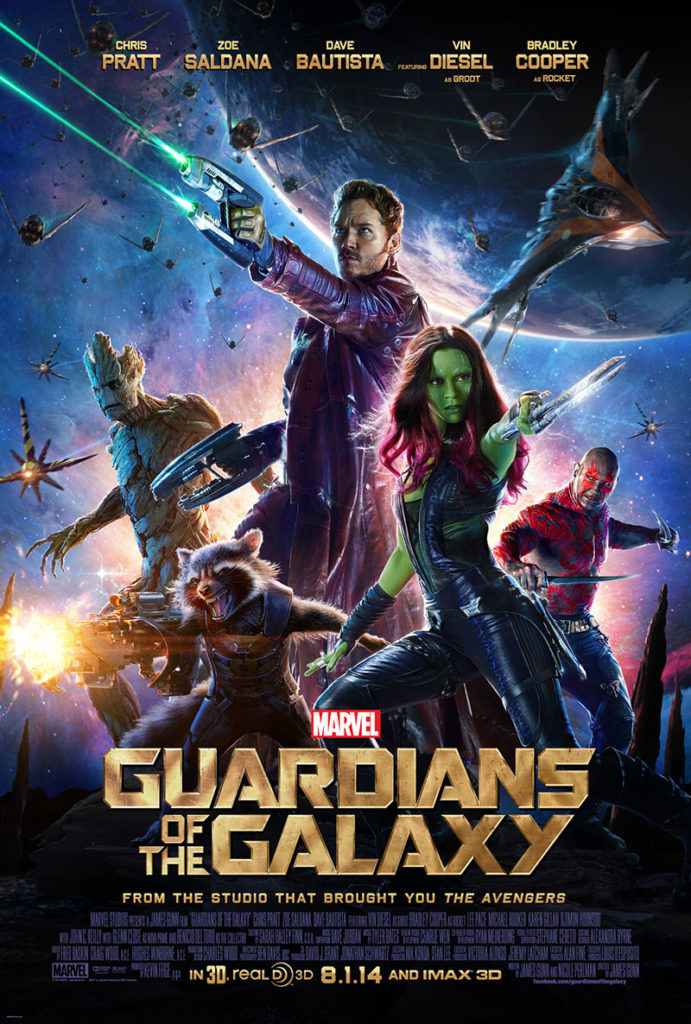
Guardians of the Galaxy

Guardians of the GalaxyI think I may have seen too many movies. That’s the only reason I can think of to explain why I did not like Guardians of the Galaxy, Marvel Studios’ 2014 money machine. It hit all the right notes when it comes to action, pacing, and story. It kept things simple, avoiding all pretension, and at no point did it strive to be something greater than it was. But...

I think the movie showed a profound disrespect for its audience. Big action movies aren’t just simple anymore. Rather, they have been simplified, stripped of any sort of nuance or individuality in the pursuit of massive box office receipts. There is nothing inherently wrong in trying to maximize profit. But what it does mean is that, in seeing a movie like this, no viewer can expect anything beyond superficial uniqueness. There are new stories out there. But new stories require an entrepreneurial spirit that Hollywood is currently anathema to. It’s hard to explain how much the studio system has changed in a generation, so I’ll just give this example: Taxi Driver was a Hollywood studio film. That’s right. Taxi Driver. A film featuring a violent psychopath, who develops a crush on an underage hooker, as a protagonist. These days, the talents of that film’s young director, Martin Scorcese, would be steered into projects that are designed from the very beginning to be sanitized versions of past successes. Continue reading “Guardians of the Galaxy”

Batman & Robin

Ah, Batman & Robin, the movie that killed the Batman film franchise. I get it. After the Batman comic books took on a darker tone in the late ’80s, it was only natural that the new films that began with Tim Burton’s Batman would become more serious and less campy. Batman, his character and his fictional world, had changed. I also get what the director of this film, Joel Schumacher, was trying to do. He understood the character of Batman from a different era. When he chose to craft a Batman movie he chose to do so in the form of a costume ball. Bright colors, festive music, outrageous outfits — its participants are all out for a wonderful night on the town, and all seem to be in on the joke. This was the Batman from the comics, just not the right Batman comics. Continue reading “Batman & Robin”