
Once upon a time, Sonny Chiba starred in a film adaptation of Bodyguard Kiba, a popular manga by Ikki Kajiwara. Chiba played the titular Kiba, who offers his services to anyone willing to expose crime and corruption. Perhaps, with Kiba’s protection, his clients will live long enough to see justice done.
As happened quite frequently with movies and TV shows from overseas, an American distributor got ahold of the rights, and released a bastardized version here in the States. Bodyguard Kiba became The Bodyguard; the name of Kiba’s character was changed to ‘Sonny Chiba,’ so the flick now features Sonny Chiba playing Sonny Chiba; and ten minutes of new footage shot in Times Square, that has nothing to do with the rest of the film, was added at the beginning. Oh, and the film opens with a reading of Ezekiel 25:17, just like Jules Winnfield says it early in Pulp Fiction, misquote and all. (The more genre films from the 1970s I see, the more I see where Quentin Tarantino found his influence. In fact, it seems as if his entire career has been remaking the movies he saw in his adolescence, bringing a high sheen to exploitation cinema. But, that’s an article for another day.) Continue reading “The Bodyguard, aka Bodyguard Kiba”
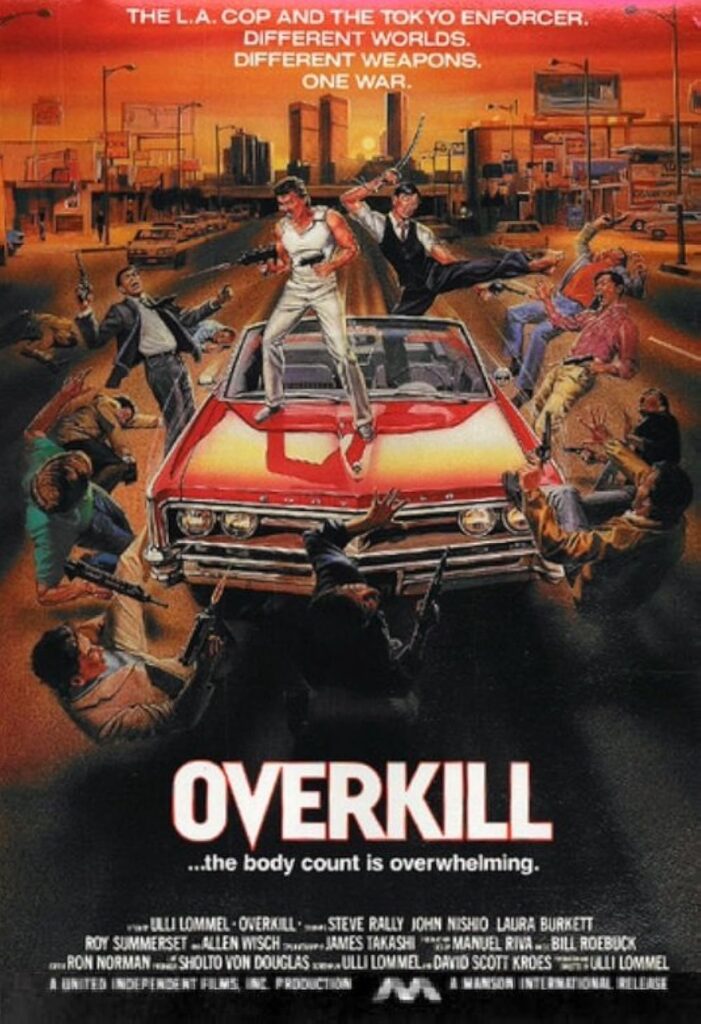 I’m going to do something that would make all the journalists in my family, living and dead, recoil. I’m going to quote Wikipedia. Of filmmaker Ulli Lommel, the unpaid army of contributors at Wikipedia sayeth:
 The 1980s are a difficult time to explain to people who weren’t there. For the 20th century, every decade had a distinctive look and feel, right up until the late ’90s when everything cultural started to have a whiff of nostalgia. One can look at only a few seconds of a film from the 20th century and be able to tell which decade it came from. Meanwhile, here in this rotten century, nothing seems to have changed since the early 2000s. Fashion, music, movies…there are new names, but a unique, stylistic identity to the times we live in has been lost.
 Once upon a time, way back in the mid-1970s, some guy in Dallas, Texas, by the name of Bobby Davis, had some dollars in his pocket and a dream. That dream: to write, direct, and produce a blaxploitation flick. He roamed the lounges of Dallas, wading into a sea of nylon and leisure suits in search of the talent he would need to make his vision a reality. Days, nay, weeks, of production pass, and Davis overcomes all of the obstacles which stand in the way of auteurs the world over, and he gets his film in the can. Now, it’s official. Bobby Davis is a filmmaker, forever more. In celebration, and aware that all great artists leave the scene at their peak, he leaves his affairs in order, climbs the Reunion Tower overlooking picturesque Interstate 35E, and hurls himself into the void.
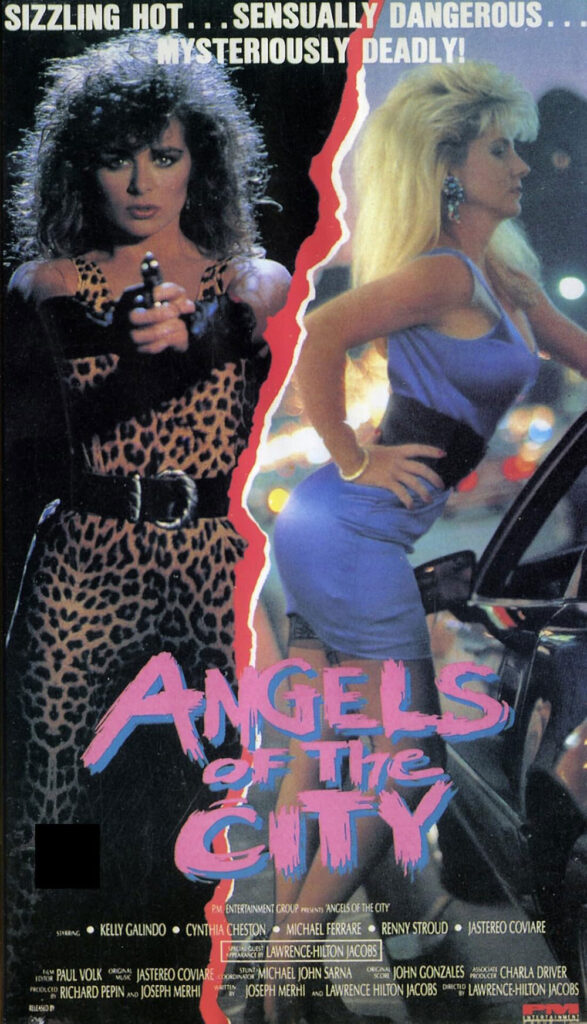 1989 was a banner year for producers Richard Pepin and Joseph Merhi. After a falling out with Ronald Gilchrist at City Lights Entertainment, the two formed PM Entertainment and began cranking out wonderfully inept direct-to-video movies. They released seven movies that first year, and distributed two more. Three of those movies were ersatz neo-noir Los Angeles thrillers featuring Lawrence Hilton-Jacobs, whom older readers will remember as Freddie ‘Boom Boom’ Washington from Welcome Back, Kotter. The relationship with Hilton-Jacobs was so worthwhile, in fact, that PM tapped him to direct. Written alongside Raymond Martino and Merhi, Hilton-Jacobs helmed Angels of the City, the story of a sorority initiation gone wrong.