
We usually prefer our 1980s shitty action flicks to have come from Cannon or Action International Pictures. Those two companies have warmed up many a chilly night in the Missile Test compound. But, New World Pictures, Roger Corman’s behemoth, could be counted on to take a break from its regularly scheduled horror, sci-fi, and good movies, to churn out a suitable action stinker.
Today’s film is Omega Syndrome, which is obscure enough that it isn’t, as of this writing, on the list of New World Pictures’ films on their Wikipedia page. But, their logo is right there at the beginning of the movie. Continue reading “Omega Syndrome”
 Way back in the 1980s and ’90s, martial artist Cynthia Rothrock was one of the queens of late night cable television. Unlike others, such as Shannon Tweed, who were known for their topless contributions to b-movies, Rothrock was an ass kicker. In her flicks, she usually played a tough cop who used her black belt skills to kick ass all over Southern California. Today’s film is a bit of a departure. Not because she didn’t play a cop or didn’t kick any ass, but because she pulled heavy supporting duties in a Hong Kong martial arts flick, something she did only a handful of times in her extensive career.
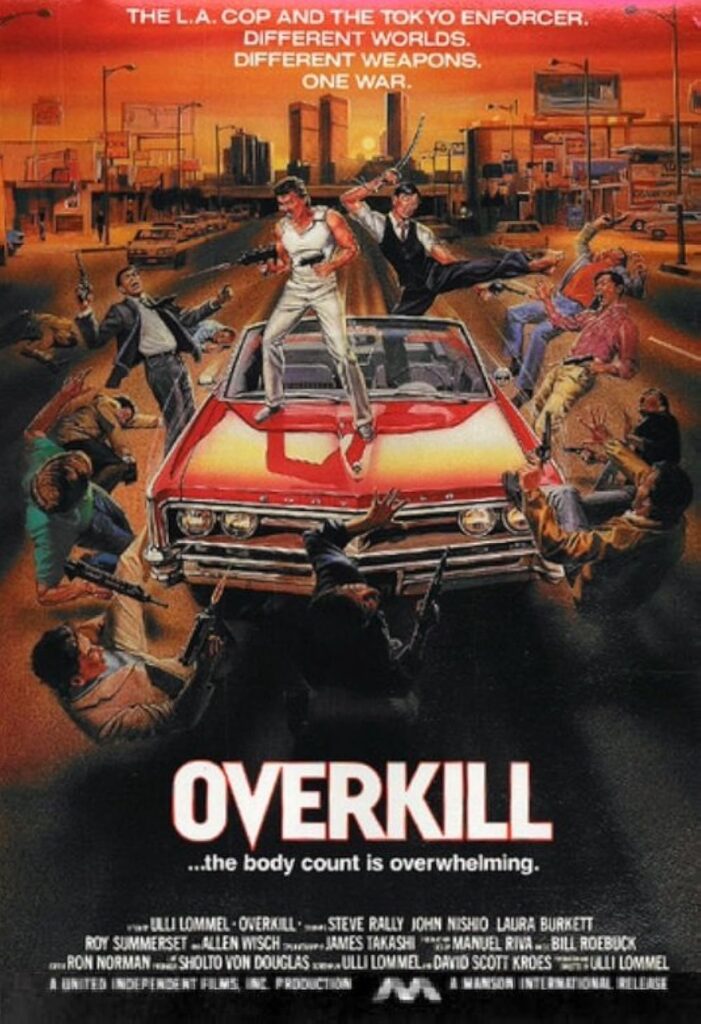 I’m going to do something that would make all the journalists in my family, living and dead, recoil. I’m going to quote Wikipedia. Of filmmaker Ulli Lommel, the unpaid army of contributors at Wikipedia sayeth: