
Sometimes, the toughest thing when writing about film is being impartial. Not every film a reviewer watches fits into their tastes or what moves them, but that does not mean a film is bad, or that it can be simply dismissed. The immediate, visceral reaction that one has to a film is only one factor that must be considered in deciding whether or not it is any good. For me, personally, there is no greater film kryptonite than a family flick. Even when I was a kid I could barely tolerate a family flick. Anything that tries so hard to be inoffensive, that so consciously tries to remove any edge or soul that is has, that appeals to the softest parts of all of us, is a whitewashing of the human experience, a greater fantasy than anything with dragons and orcs in it. Nobody, and I mean nobody, smiles as much as the suburban American zombies that inhabit family films. I don’t know why the idea of wholesomeness enrages me so much, but it always has, and it always will. Continue reading “Kindergarten Cop”
Tag: Crime Flick
Red Heat
Most anyone who became aware of both self and American culture after the 1980s has heard of Arnold Schwarzenegger. They’ve probably seen at least one of his films, or maybe heard that he ran California and had terrible taste in SUVs. That’s not all these people would have in common. They would also all be collectively unaware that, once upon a time, Jim Belushi was famous. That’s right, Millennials and those from the generation-yet-to-be-adequately-named, once upon a time there was a mediocre actor and comedian who punched well above his weight, starring in such films as The Principal, Real Men, K-9, and Red Heat, all of which made money. Continue reading “Red Heat”
Raw Deal
This movie is Arnold Schwarzenegger on the cusp. After Conan and The Terminator, people knew who he was, he was a legitimate star, and this earned him more roles. But he was still making movies for Dino De Laurentiis. That man was a producing legend, but not always for the best reasons. For every Blue Velvet or Serpico, there were about five or six Maximum Overdrives. De Laurentiis movies look cheap, like the filmmakers that made them didn’t have the cash they needed, or weren’t competent filmmakers in the first place. Raw Deal was the last De Laurentiis film with Arnold to hit theaters, and Arnold was probably glad about that. Continue reading “Raw Deal”
American Hustle
Five minutes into American Hustle, I realized I probably was not going to like the film. I stuck around for the next two hours, but the film never grabbed me. It has been praised by critics, but I consider myself kin to the many other viewers who left the film feeling apathetic. Us emotionless millions, unmoved by a film with such heavyweights, such ACTING — we are legion. Continue reading “American Hustle”
The Yellow Sea
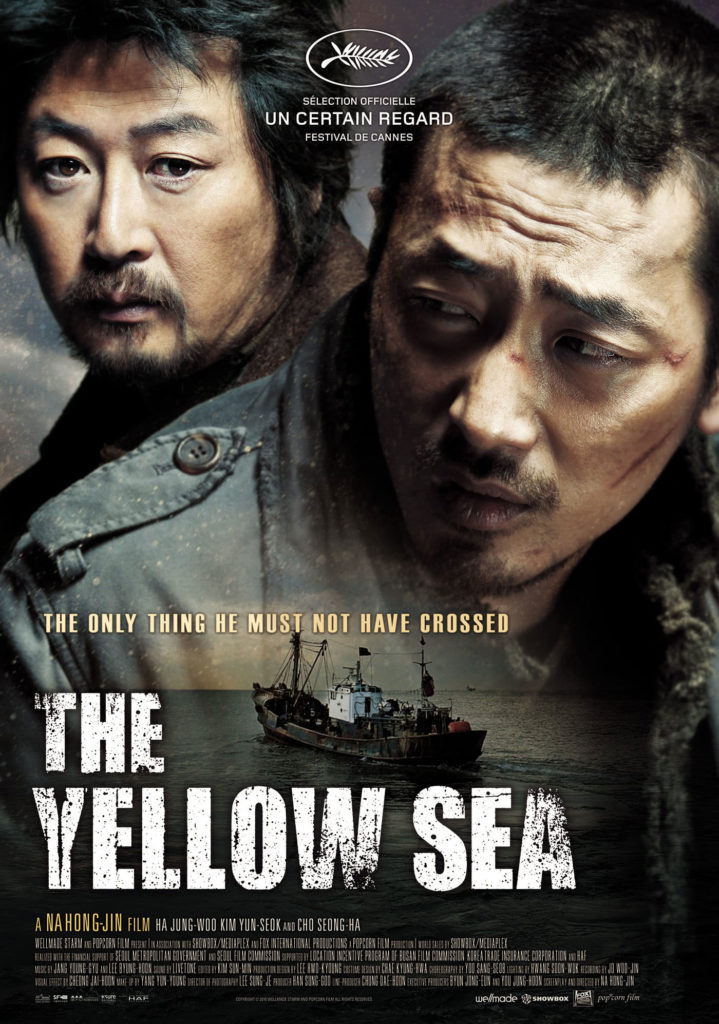 If you can follow the plot of The Yellow Sea, the Korean film from 2010 written and directed by Na Hong-Jin, then you must be Korean, or at least speak the language fluently. Those are the only reasons I can think of why so many western viewers online, including myself, found this flick’s plot to be confusing, at best, and impenetrable, at worst. The good news is that doesn’t matter. Normally, when a movie has a plot that I can’t follow, that is a bad thing. Not so with The Yellow Sea. About halfway through, I gave up on trying to keep track of all the twists and turns, and just sat back and enjoyed one of the best action films that has hit cinemas in this decade.
Gu-nam (Ha Jung-woo) has a problem. He’s an ethnic Korean born and raised in northern China, which has its disadvantages, apparently. He is what is known as a Joseonjok, a blanket term for ethnic Koreans in the country. In order to finance a better life, Gu-nam goes into debt with some local coyotes to arrange transportation to South Korea for his wife. Because the standard of living in South Korea is so much higher than in China, she should be able to work and send back enough money to Gu-nam to pay off the debt to the coyotes and finance a trip down to the peninsula for both Gu-nam and the couple’s young child. But, something goes wrong. Gu-nam’s wife has been in Seoul for months, and nary a check has arrived. On top of that, the coyotes want their cash. In desperate straits, Gu-nam agrees to be smuggled in to South Korea on a fishing boat, to carry out a hit for a Joseonjok gangster, with the understanding that the debt will be paid. Continue reading “The Yellow Sea”
Stick
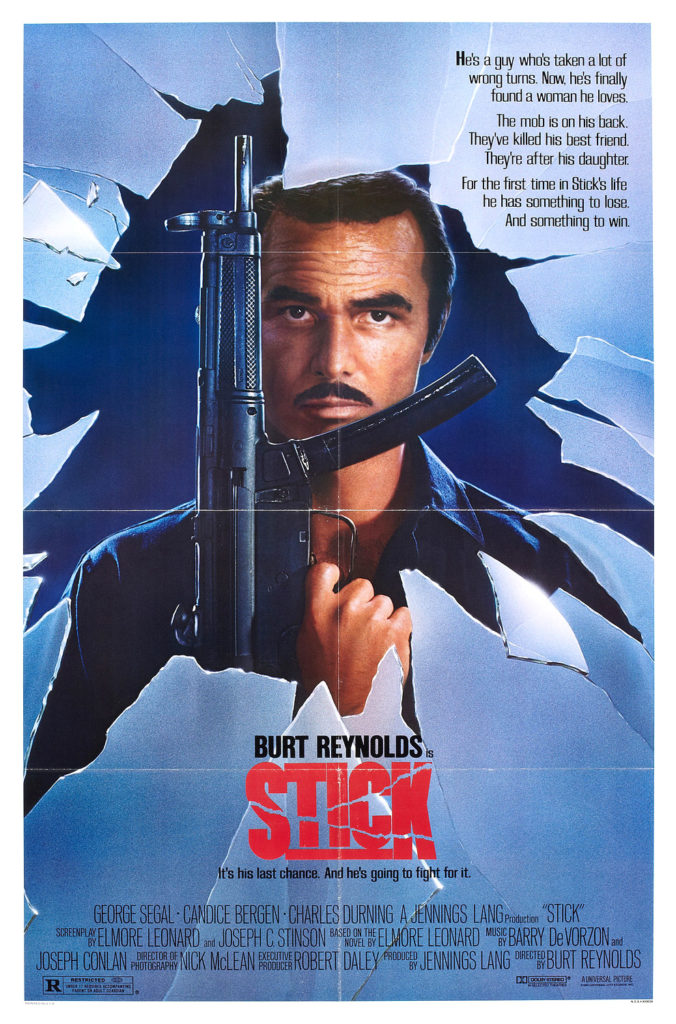 The 1980s were a tragic decade for people who used to be cool. The ’80s put Eric Clapton in shoulder pads, Miles Davis in sequins, and, in Stick, a vanity project from 1985, Burt Reynolds in a pink jacket. It wasn’t just that pop culture stalwarts such as these men merely looked bad in the ’80s — everything the previous decades’ stars seemed to do was an epitaph to former glory, wrapped up in a decade where the prevailing styles in everything from fashion to music to film was pastel mediocrity. (A fun topic for barroom conversation is trying to picture how those who didn’t survive the ’60s and ’70s would have handled the ’80s. Imagine Jimi Hendrix with Jheri curls or Jim Morrison recording a solo album aided by a drum machine and a salad bowl full of cocaine. Not pretty.)
That’s not to say the ’80s were devoid of great art. The examples are too numerous to mention. But I am saying that in comparison to other decades, the ’80s exist, in my memory at least, as a neon nightmare.
Enter Stick, a Burt Reynolds’ acting and directing vehicle with a screenplay by Elmore Leonard, adapting his own book. Continue reading “Stick”
Kill List
Kill List, Ben Wheatley’s intense film from 2011, is impossible to classify. After having seen it, it continues to exist in my memory as an attack on convention, and an attack on my innate need to shove a film into this or that genre. It would be easy to just write that the film is a British crime drama, but nothing about this film is easy. Continue reading “Kill List”
The Boondock Saints
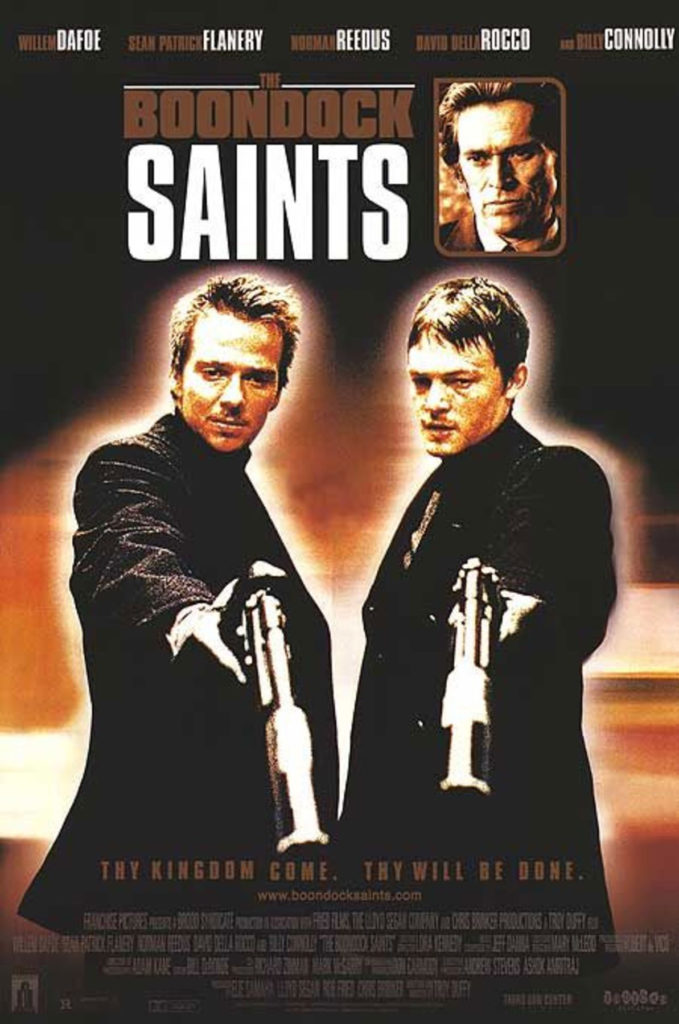 Every person, whether they be a casual movie viewer, or enough of a film buff that they have written tens of thousands of words about film (heh heh), has holes in their experience of film. There are a lot of movies out there, and there is just not enough time in the day to watch them all. The Boondock Saints is a case in point. Until last night, I had never seen this film, even though it’s on the must-see list for white males of my generation. If I had grown up in the Boston area, I’m sure I would have seen it before now, as watching it is positively de rigueur up there.
The film, written and directed by Troy Duffy, follows a pair of Irish immigrant brothers in Boston, named Connor and Murphy MacManus (Sean Patrick Flanery and Norman Reedus). They’re devoted Catholics, made clear early in the film, but in the same scene, it’s also made clear that the two of them are unrepentant badasses. Nobody in church looks that cool, but that’s what passes for character development in this movie.
Later, the viewer finds out the brothers have gotten themselves into a bit of trouble, resulting in a couple of Russian gangsters lying dead in an alleyway. Here, the film enters into a somewhat disjointed method of storytelling, as the MacManuses begin to cut a bloody swath through Boston’s criminal organizations. We viewers always seem to show up on the scene after the fact, accompanying FBI Agent Paul Smecker (Willem Dafoe) as he investigates the deaths, narrating his deductions as the reality plays out on screen in flashback. The most interesting aspect of this method is that, as the film progresses, what was, early on, straight flashbacks, become more and more muddled with current events in the movie’s timeline, like there’s a progression of decay where violence and Dafoe will soon meet without any need for speculation. If that was Duffy’s intent, then well done. If it was accidental, then no matter. Continue reading “The Boondock Saints”
King of New York
I read recently that Christopher Walken may be getting his own cooking show. It was on the internet, so it must be true. Fact or fiction, that got me thinking about Mr. Walken, and when considering his career arc, those thoughts inevitably turned to Abel Ferrara’s 1990 crime flick, King of New York. Continue reading “King of New York”
End of Watch
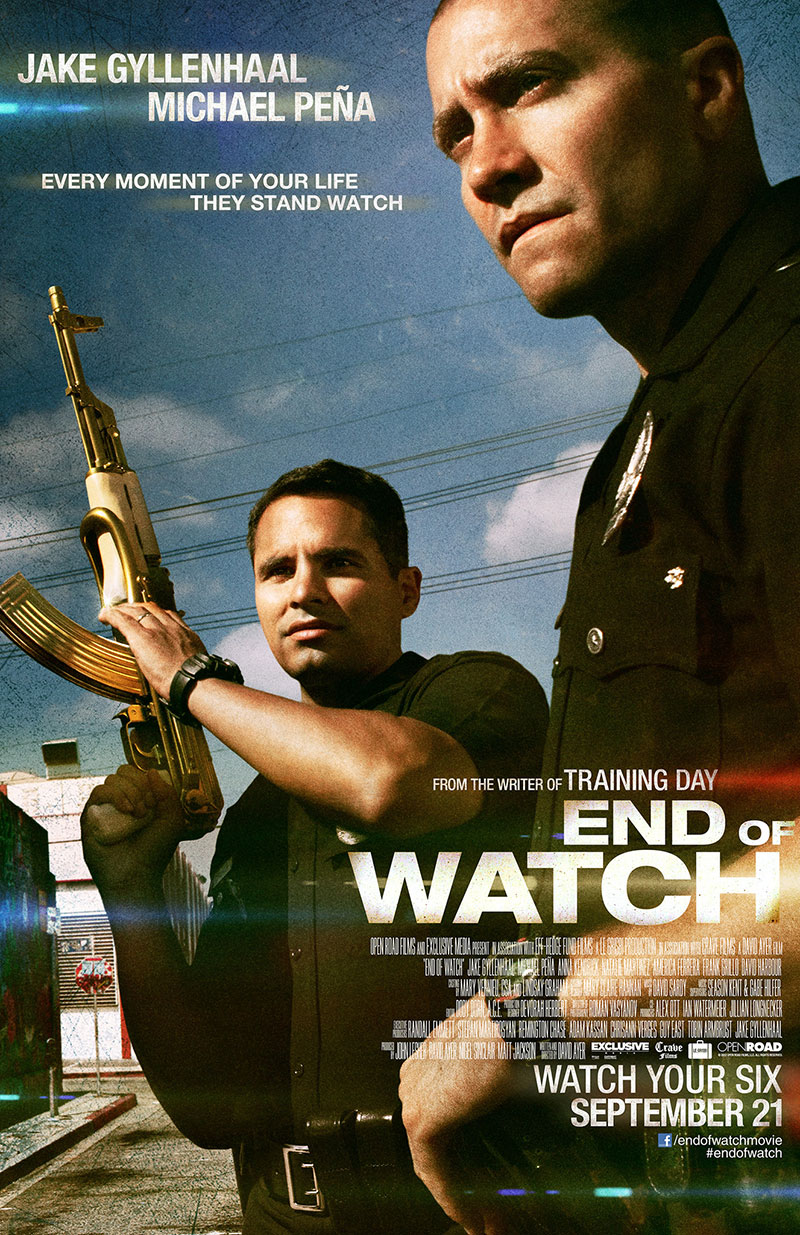 Gritty New York City cop dramas are stylistically different from gritty Los Angeles cop dramas. It’s only partly due to setting. It would be hard for a film to ignore the differences between the coasts, but as far apart as the Eastern Seaboard and SoCal are, geographically and culturally, these differences are not what set cross-continental police flicks and television series apart. Just doing a loose word association, when I think NYC cop drama, my first thought is Law & Order and all of its iterations — police procedurals that follow detectives. After that I drift back to films from the past like The French Connection, Serpico, Fort Apache the Bronx, The Taking of Pelham One Two Three, Across 110th Street, even Bad Lieutenant. These films represent my own personal biases, but they all adhere to a palate of sorts that is broadly representative of New York City cop films.
Across the farmlands, the plains, the mountains and the deserts, Los Angeles has been building its own mythos regarding the LAPD on film. After decades following the cop as superman (think Lethal Weapon, Cobra, etc.), that model looks set to be replaced by episodes of Cops. I’m not joking. Some of the best work regarding LAPD officers of late hasn’t involved huge explosions and guns that never run out of ammo. It hasn’t been the lone detective doggedly pursuing the impossible murder case. It hasn’t been buddy movies. It’s been the uniformed officer. Continue reading “End of Watch”