
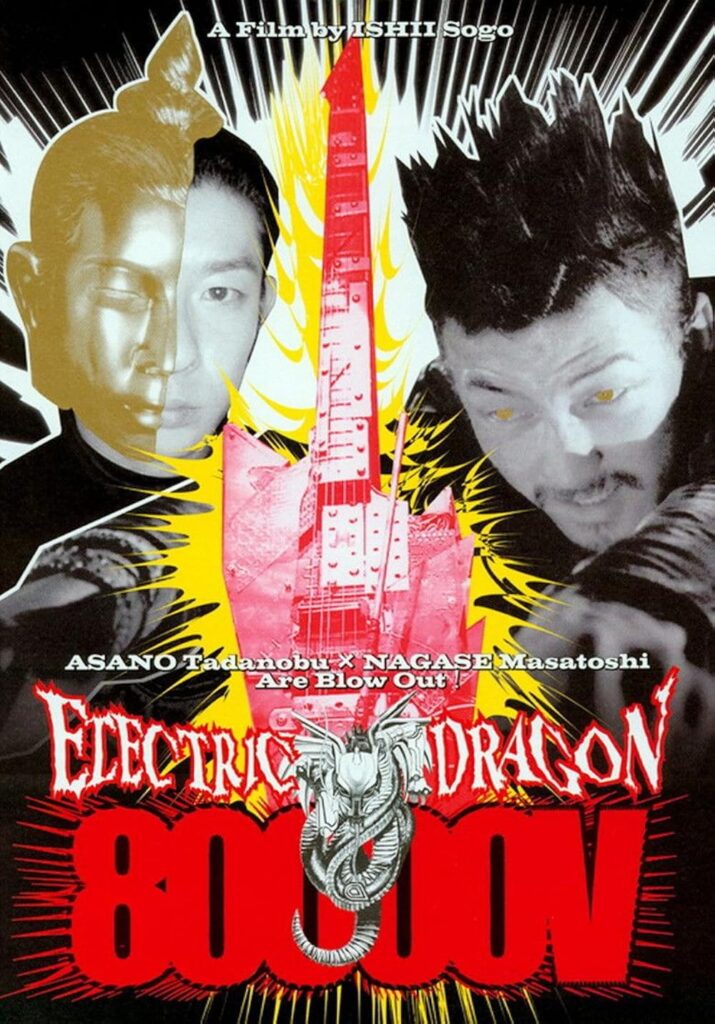
 Here at Missile Test, we love films with brevity. Keep it tight, don’t overstay one’s welcome, and try not to have multiple points after denouement when the credits could have begun to roll. We get it. Film is art, and artists have something to say. Cutting a film can feel like lopping limbs off of their own children. But there is little worse in film than having to sit through bloat. That won’t be a problem with Electric Dragon 80,000V, from Japanese filmmaker Gakuryu Ishii. This film clocks in at a brisk fifty-five minutes, and if a viewer can’t sit still for that long, it isn’t Ishii’s fault.
Dragon is one of those Japanese sci-fi flicks from the era (it was released in 2001) that relies on frenetic pace and cyberpunk visuals to tell the story. There is a story, but it’s peripheral to the visual dance of the movie.
Tadanobu Asano plays Dragon Eye Morrison, a young man whose violent tendencies were treated with electro-shock therapy, leaving him with superhuman abilities to throw electricity around. He finds inner peace by playing wild electric guitar, and spends his free time hunting down lost lizards in the back alleys and storm drains of urban Japan. This guy is the protagonist. Continue reading “Electric Dragon 80,000V”
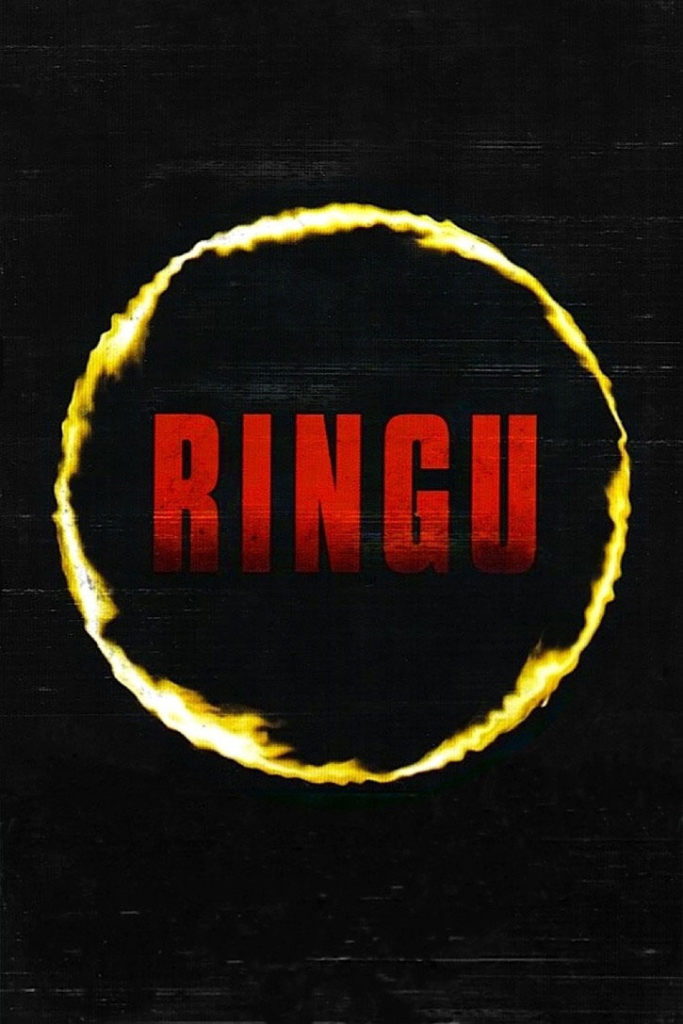 It’s the October Horrorshow! It’s no secret that I hate autumn. It’s a shit time to be alive here in the northern latitudes, where the air takes on a chill, the days become noticeably shorter, and every plant from here to Seattle looks like it’s dying. Thank goodness, then, for Halloween. The festival of death is a yearly finger in the eye to the fall season, when we, and by that, I mean me, watch lots and lots of horror flicks. I choose to embrace nature’s inexorable slide into hibernation by watching fake snuff films, paradoxical as that is, and I love every minute of it. Like last year, there’s a full slate of reviews this year. No gaps. And the first is a double billing.
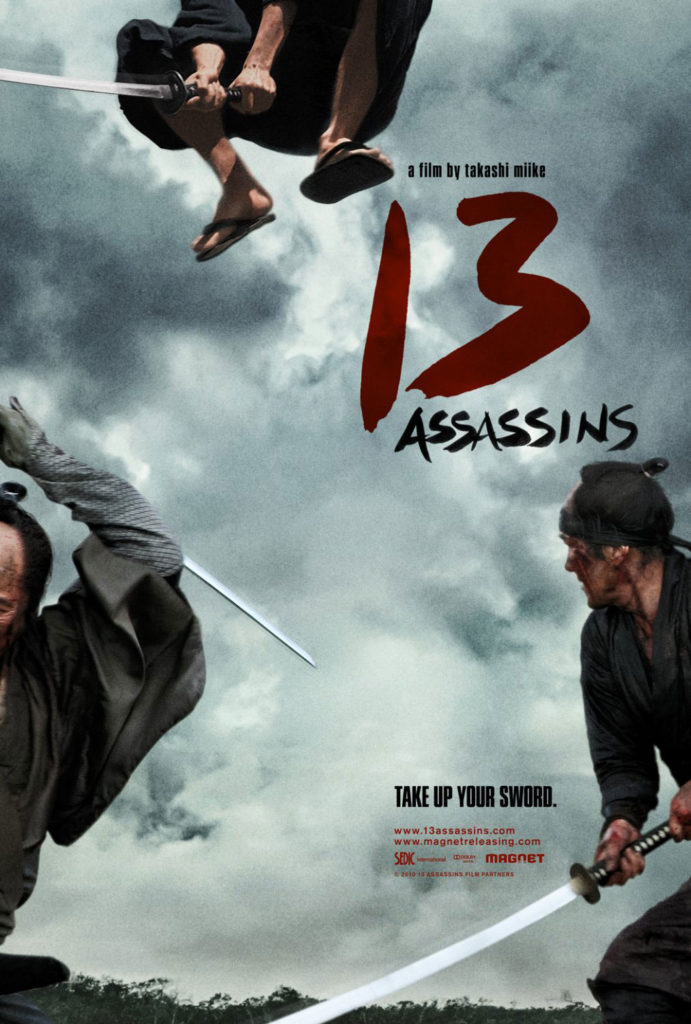 Three historical periods in Japan are among the most interesting and compelling in the annals of human civilization. The Sengoku period, also known as the Warring States period, comprised the height of feudal conflict from the 15th century to the early 17th century, culminating in the unification of Japan under the Tokugawa Shogunate in 1603. The new era of peace which followed, the Edo period, lasted until the Shogunate collapsed in the wake of internal and external pressures for Japan to end its forced isolation and open its shores to the modern world in the 1860s. What followed was the Meiji period, when the emperor was restored to power, and Japan, through numerous fits and starts, became the empire that was finally defeated by the Allies in World War II.