
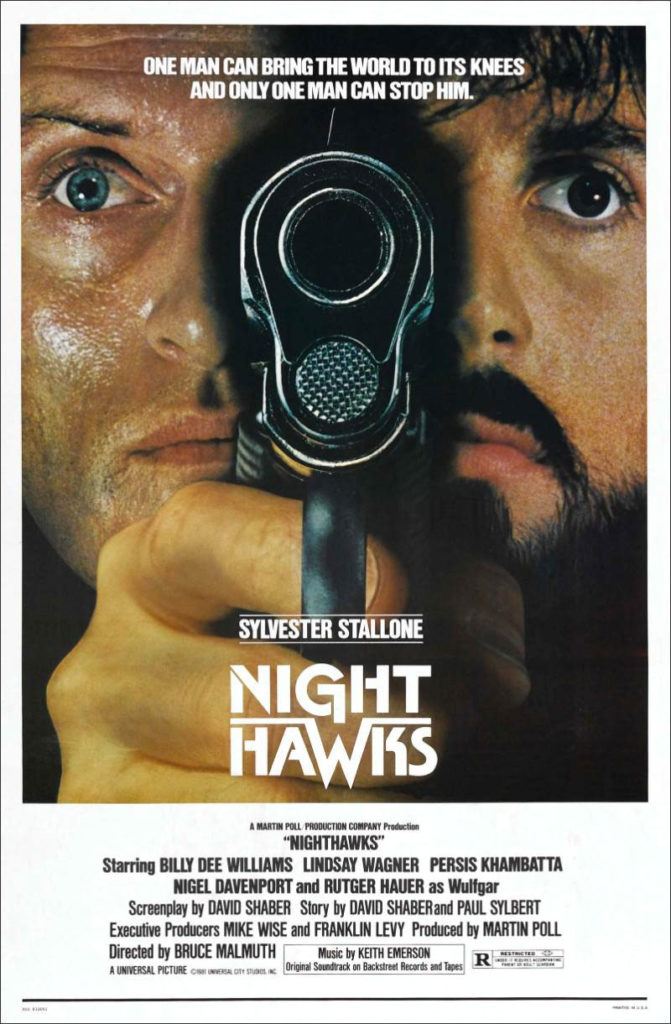
 Nighthawks, the 1981 film from director Bruce Malmuth and screenwriter David Shaber, sets itself up as a gritty New York City crime drama. The opening features blighted locations from the city’s darkest days, there’s a strong and stupidly simple anti-drug message, and there’s even a police lieutenant with a strong temper. I was expecting a cross between Dirty Harry and The French Connection with that setup. But instead of chasing after some drug lords or a typical big city psycho, the heroes of Nighthawks, NYPD Detective Sergeants Deke DaSilva and Matthew Fox (Sly and Williams), are drafted into a new unit that is after terrorists.
That’s right, folks. A film from 1981 explored the means and methods of combating international terrorism in New York City. Terrorism has been around for a while, now.
The bad guy in this film is Wulfgar (Rutger Hauer), a mercenary in the world of terrorism. He doesn’t seem to have any sort of ideology other than making the governments of the western world bleed. He’ll hire himself out to the Irish Republicans or the Iranians with no thought as to what their goals may be. When viewers first see him, he’s blowing up a pub in London. This sets up his bona fides nicely. A bit more globe hopping lands Wulfgar in New York, where the anti-terrorism task force is, they think, ready for him. Continue reading “Sylvester Stallone and Billy Dee Williams are…NIGHTHAWKS!”
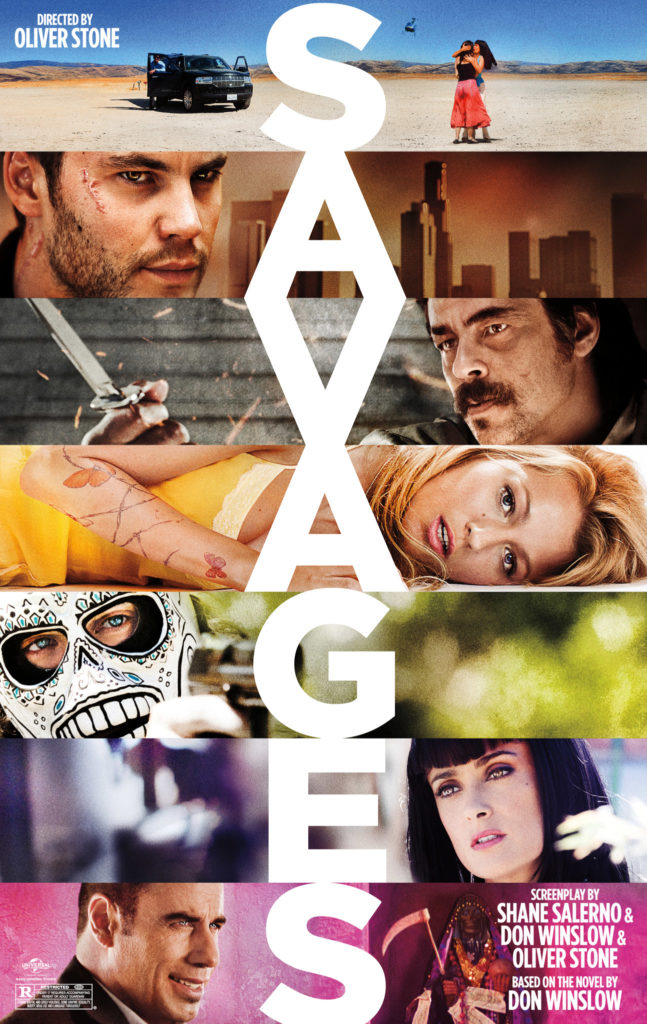 Taylor Kitsch just had a bad year. He starred in three major release films. How can that possibly be bad? The three films were Battleship, John Carter, and Oliver Stone’s latest ham-fisted effort, Savages. Three films, three disappointments, and Mr. Kitsch has suddenly moved into Ryan Reynolds territory as the latest bankable star that turned out to be not so bankable. It isn’t all his fault, though. John Carter was doomed from the start, and Battleship was so awful, a cavalcade of thespians from the Royal Shakespeare Company couldn’t have saved it.
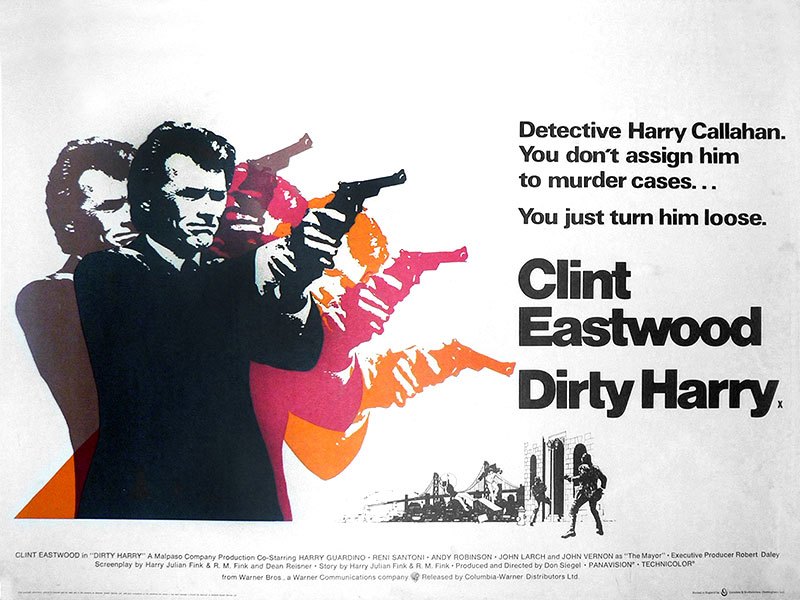 The tough-nosed cop with a disdain for the rules is a staple in film. Always butting heads with desk-bound lieutenants and mayors more concerned with getting reelected than cleaning up the streets, this breed of law enforcement officer has little time for procedure or the niceties of due process. Largely a fabrication of Hollywood, this cop operates in a world where the worse the crime, the more likely the guilty will go free due to the dreaded plot device known as “technicalities.” It’s all the more galling because there is never any doubt to the audience or to the hero that the bad guy is bad. Letting the bad guy go free because his rights were violated is nothing less than a miscarriage of justice, and it’s always left up to the hero cop to right such grievous wrongs. No film comes to mind that explored these ideas more effectively than 1971’s Dirty Harry.