
10 Cloverfield Lane, from director Dan Trachtenberg, was billed as the spiritual successor to Cloverfield, from 2008. The filmmakers, including producer JJ Abrams, have been coy about exactly how this newest film relates to Cloverfield, and this ties in well with the general air of mystery that has surrounded the films’ promotional campaigns. But in actuality, how the two films are related is an impossible question to answer, so the people involved have to be cagey. 10 Cloverfield Lane was developed independently of Cloverfield, and other than the title, has no relation. Linking the two films together was a bit of smoke and mirrors on Bad Robot’s part to give the new film a leg up at the box office. It’s disingenuous, sure, but luckily it doesn’t matter. There are plenty of genuine sequels out there that are terrible films. If a good one wants to latch on to a successful film like a remora, that’s fine with me. Continue reading “10 Cloverfield Lane”
Tag: Sci-Fi Flick
Terminator Genisys
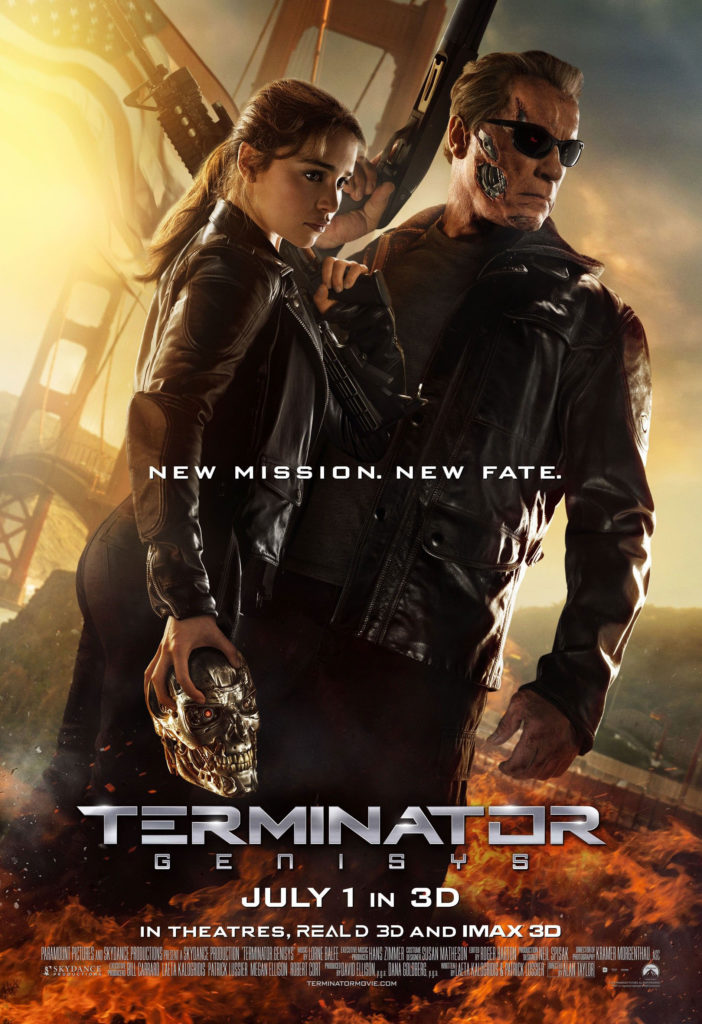 It’s incredible how little redundancy is built into Skynet. Not long after Terminator Genisys opens, we see the mythical John Connor leading an assault on Skynet’s time travel facilities. Connor, played by Jason Clarke, has ordered the bulk of his forces to attack Skynet itself, farther north, much to the consternation of Kyle Reese (Jai Courtney), who hasn’t been let in on the Terminator series canon at this point. As the battle rages at the time machine, all of Skynet’s killer robots go inactive, signaling that Skynet has been destroyed, and only the war in the past remains undecided.
A viewer is required to engage in a large amount of suspension of disbelief in order to enjoy Terminator films. There’s the whole time travel/killer robots thing to get past, and a plot hole-to-consistency ratio that is weighted too far towards the wrong side. But the idea John Connor’s troops could attack a single location, presumably blow it to smithereens, and a worldwide computer network would collapse, is ludicrous.
This is it. We’re in the future. Thirty years ago, when the first Terminator was released, something like Skynet was as far beyond our comprehension as time travel, making it fine to just make stuff up. But today we live in a world of server farms and off-site backups. Sure, there are still times when an ISP goes offline and millions of people can’t get their email, but those times are rare, and never last all that long (unless it’s a Sony network). Continue reading “Terminator Genisys”
Creature
This piece of shit is going to be on the internet forever. Why? Because it’s in the public domain. That means it belongs to each and every one of us. We are the stewards of this film’s preservation. Oh, lordy. It also means that if any potential viewers out there see it for rent or purchase, stop before hitting the ‘buy’ button and hit the Google machine. A free viewing is just a click away. As for myself, I saw this dog on Netflix, the streaming service proving, yet again, that its profit model dictates that a large percentage of its film content is bottom-dwelling sludge. Continue reading “Creature”
Harbinger Down
Back in 2011, Amalgamated Dynamics, Inc., got screwed. ADI, an Academy Award winning practical effects company, had worked hard on the remake/prequel of The Thing. But, sometime during post-production, the decision was made to replace all of ADI’s work with CGI. The resulting effects were poorly received, and with good reason. They don’t look good. They’re the type of effects that make film buffs pine for the time before CGI was a thing, when makeup and puppetry were king in horror flicks. My biggest issue with the CGI is that it is clearly CGI. It never manages to cross over into believability. It looks like a cartoon is intruding into a live action movie. Continue reading “Harbinger Down”
San Andreas, or, an October Horrorshow Interlude
I couldn’t wait for after the Horrorshow to post this review. This flick is just too special. And what a gloriously stupid movie it is. But, a big, bombastic disaster flick is good to see every now and again. They come in waves, too. Some studio will put out a big budget disaster flick that makes a pile of cash and then all the others can’t wait to put their own into production. Then after a year or two the quality takes a dip and audiences get tired and disaster flicks go into hibernation until audiences are ready again. Marvel and DC would do well to take note. They’re reaping the benefits of their respective formulae now, but eventually audiences will rebel and one of those two will lay a big fat turd at the box office — something kin to The Core — and ruin the party for everyone (an argument could be made that this happened with the Fantastic Four reboot this summer, but for now audiences are not blaming Marvel for franchisee Sony messing up Marvel’s intellectual properties). But, I digress. Continue reading “San Andreas, or, an October Horrorshow Interlude”
Extraterrestrial
A few years ago, I was pleasantly surprised by Grave Encounters, the first feature from the writing/directing team of The Vicious Brothers (Colin Minahan and Stuart Ortiz). They were working with a miniscule budget and an overdone idea, but managed to make a very good little ghost flick. Last year saw them release another film that couldn’t make it past the festival circuit, but, thanks to the internet, is reaching viewers in ways that were impossible even ten years ago. Continue reading “Extraterrestrial”
The War of the Worlds (1953)
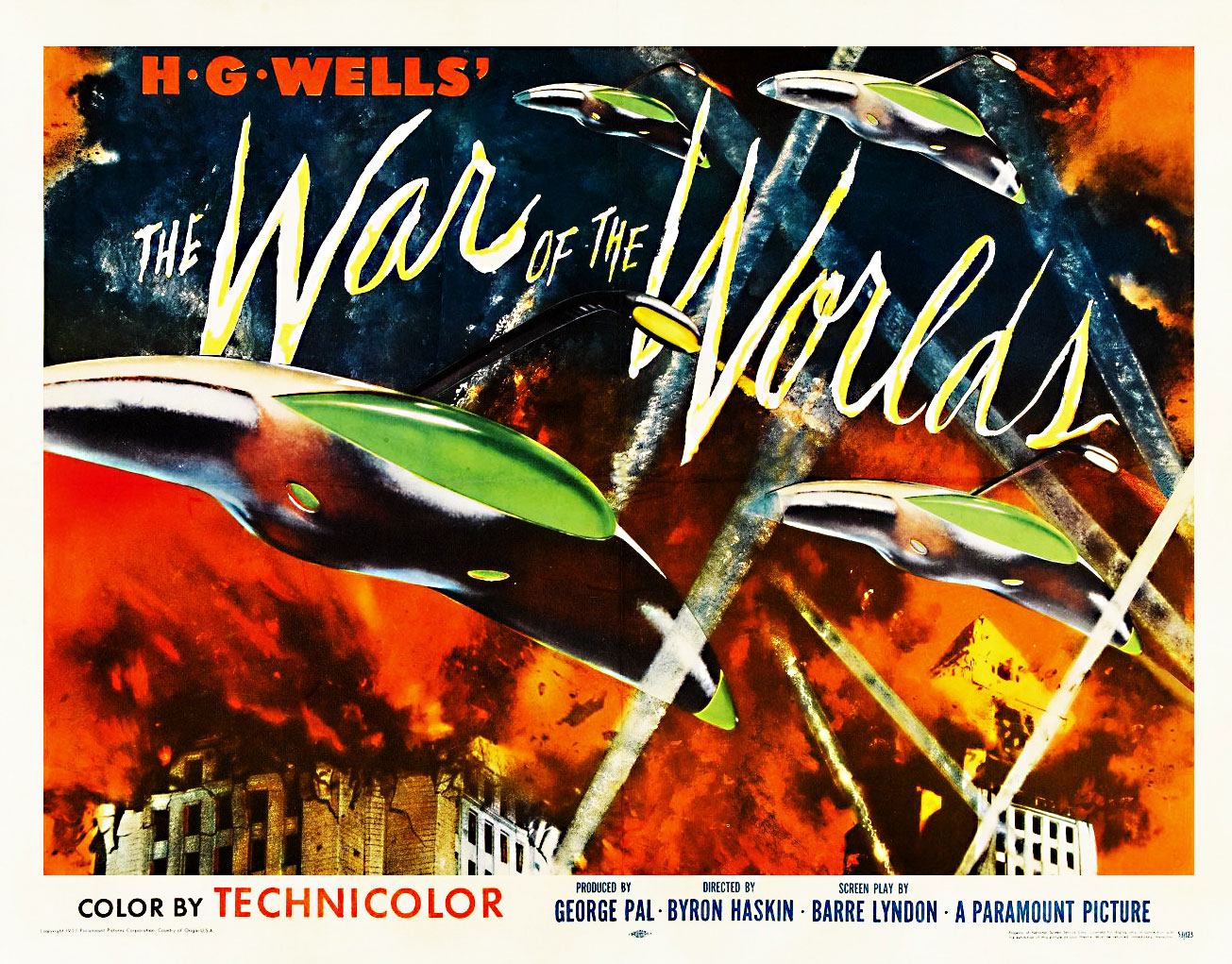 Monsters, devil worshippers, demons, ghosts, sadomasochistic inter-dimensional travelers...it can get to be too much. It’s time for the Horrorshow to take a step back from all the gore and scary stuff and spend some time with some nice, wholesome alien invaders.
From 1953 and adapted from the famous HG Wells story, The War of the Worlds is not the first alien invasion flick, but it is prototypical. A mass surprise invasion by alien beings in possession of unstoppable destructive power threatens to overwhelm the world. The situation is dire, the entire world mere days or hours from being conquered. But, against the odds, and due to providence, luck, good old-fashioned American ingenuity, or a thorough lack of understanding of the laws of nature on the part of the aliens and the screenwriters, the invaders are vanquished. And I mean vanquished. No alien invaders ever just get beat, or end up slogging into insurgency warfare (with the notable exceptions of V and Falling Skies, but that’s on TV). Aliens in these flicks get wiped out, in total, usually in a matter of minutes. The denouement in these films, The War of the Worlds included, can feel a bit rushed. But that doesn’t mean it doesn’t work. Continue reading “The War of the Worlds (1953)”
Ragnarok
Ragnarok, the 2013 film from Norway, is not a horror movie. At first glance, it has all the makings. There’s a small cast, a remote locale, an abandoned Soviet military bunker, and there’s a monster. So this is a monster movie, then? Well, yes, but not so much. As it turns out, Ragnarok is a family adventure movie. What has the October Horrorshow come to? Have I exhausted my options to such an extent that I have to dip into other genres just to fill out a month? No, I do not. But I feel I have been deceived, and have to share. Continue reading “Ragnarok”
Guardians of the Galaxy
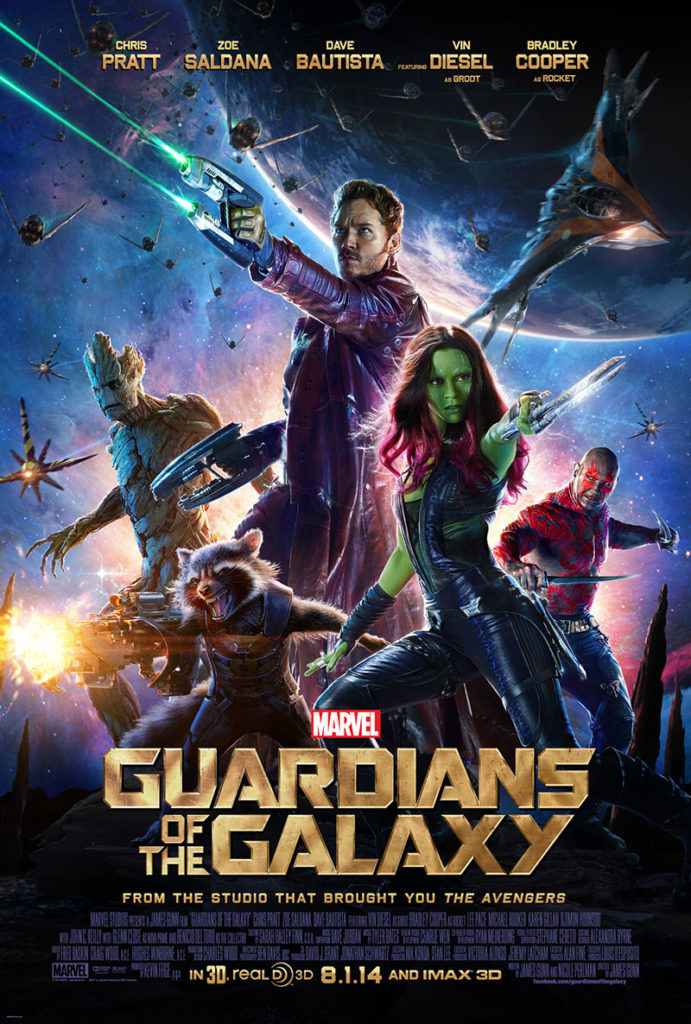 I think I may have seen too many movies. That’s the only reason I can think of to explain why I did not like Guardians of the Galaxy, Marvel Studios’ 2014 money machine. It hit all the right notes when it comes to action, pacing, and story. It kept things simple, avoiding all pretension, and at no point did it strive to be something greater than it was. But...
I think the movie showed a profound disrespect for its audience. Big action movies aren’t just simple anymore. Rather, they have been simplified, stripped of any sort of nuance or individuality in the pursuit of massive box office receipts. There is nothing inherently wrong in trying to maximize profit. But what it does mean is that, in seeing a movie like this, no viewer can expect anything beyond superficial uniqueness. There are new stories out there. But new stories require an entrepreneurial spirit that Hollywood is currently anathema to. It’s hard to explain how much the studio system has changed in a generation, so I’ll just give this example: Taxi Driver was a Hollywood studio film. That’s right. Taxi Driver. A film featuring a violent psychopath, who develops a crush on an underage hooker, as a protagonist. These days, the talents of that film’s young director, Martin Scorcese, would be steered into projects that are designed from the very beginning to be sanitized versions of past successes. Continue reading “Guardians of the Galaxy”
The One I Love
When The One I Love was getting set for release, its star, Elisabeth Moss, was making the rounds of the talk show circuit. I caught one of her appearances, I forget which show, and she was cagey about the plot. She was concerned about giving away the big spoiler in the film. The trailer, having gone through the hands of a marketing department, does everything short of spoiling the big reveal. In the trailer, a troubled couple, Ethan and Sophie (Mark Duplass and Moss), take a weekend retreat to one of those gorgeous houses that so many dream of, and only a few have. There’s a guesthouse on property, and something weird is going on inside. Throughout the trailer, the idea that something is going on inside that house is pounded home again and again and again. Okay, we get it! There’s a unique plot twist ahead and you don’t want to tell us potential viewers what it is, but calling so much attention to it makes you seem desperate for viewers. I hate the trailer for this movie. It crows at the audience like a child on a diving board, calling out for mom or dad to watch the sick cannonball they’re about to do. Just jump in the pool, kid. Mommy is having a grownup conversation. Continue reading “The One I Love”