
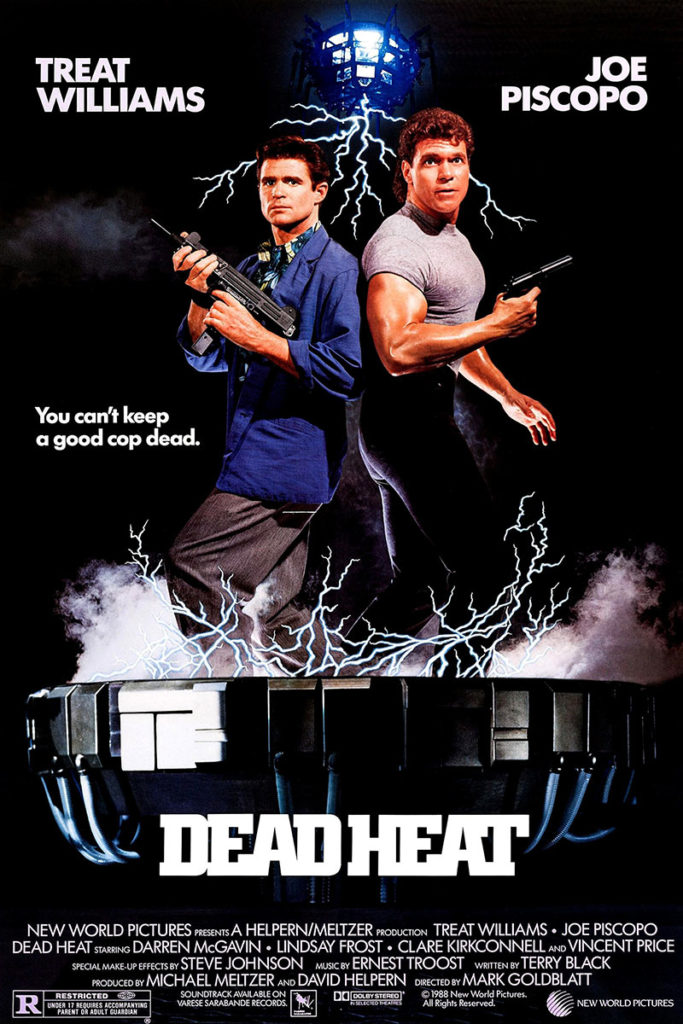
 “These caps[sic] are on the biggest murder case of their lives...their own.”
So declares the DVD box art for the 1988 zombie action flick Dead Heat. When searching for a shitty movie to idly pass an evening, a typo on box art is a pretty fair indication a viewer has found a winner. Any movie called Dead Heat and starring Joe Piscopo doesn’t need any extra hint that it’s a special film, but the fact the producers didn’t care enough to release the flick with a simple bit of copy editing on the box is just icing on the cake.
Directed by Mark Goldblatt, Dead Heat follows two 1980s Hollywood-style rogue cops, Detectives Mortis and Bigelow (Treat Williams and Piscopo, respectively), as they try to track down a ring of armed robbers that have an uncanny ability to absorb massive amounts of flying bullets and not die. The film opens with a shootout of ridiculous proportions to ram this point home, as a pair of robbers armed with Uzis take on half the police force in a shootout on the street. Cops are dropping left and right, but no matter how many times the perps are shot, they just won’t go down. It takes a grenade and a speeding car to do the trick. To start the film, this scene is a total howler, in the scale of its violence and its absurdity. It does wonders to set up the rest of the film for a viewer. Continue reading “Dead Heat (1988)”
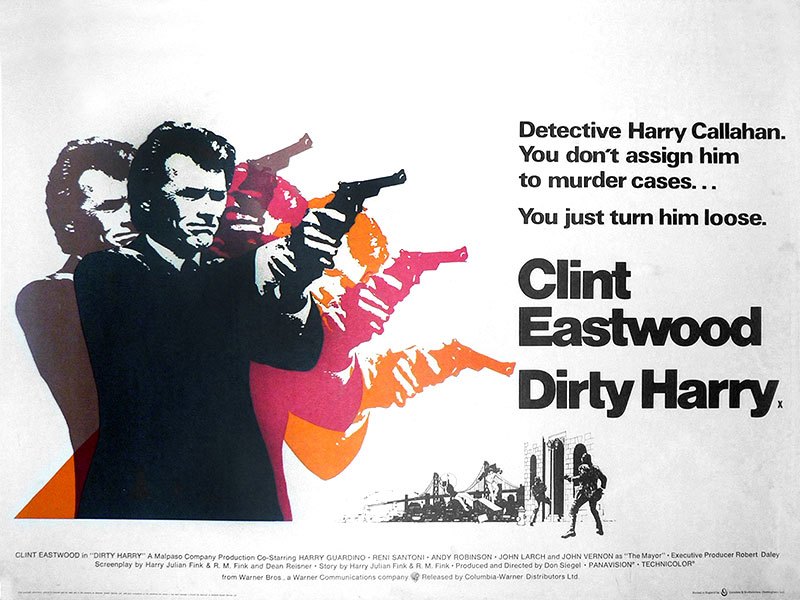 The tough-nosed cop with a disdain for the rules is a staple in film. Always butting heads with desk-bound lieutenants and mayors more concerned with getting reelected than cleaning up the streets, this breed of law enforcement officer has little time for procedure or the niceties of due process. Largely a fabrication of Hollywood, this cop operates in a world where the worse the crime, the more likely the guilty will go free due to the dreaded plot device known as “technicalities.” It’s all the more galling because there is never any doubt to the audience or to the hero that the bad guy is bad. Letting the bad guy go free because his rights were violated is nothing less than a miscarriage of justice, and it’s always left up to the hero cop to right such grievous wrongs. No film comes to mind that explored these ideas more effectively than 1971’s Dirty Harry.
 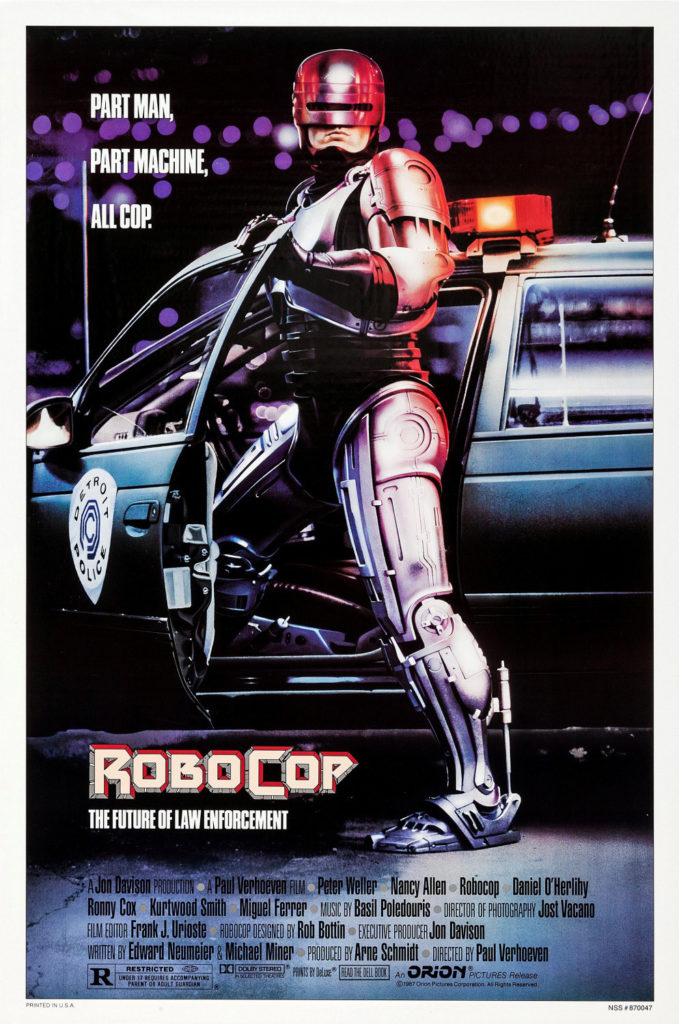 Dystopian future societies are the stuff dreams are made of. They are what grow from the seeds of our own decadence and shallowness. The moral bankruptcy, and sometimes outright horror, of the settings of films like Blade Runner, A Clockwork Orange, THX 1138, Escape from New York, and Soylent Green wouldn’t be possible if writers and directors didn’t look around them and see the lightning speed with which we throw ourselves into unknown futures, sometimes without regard for so many of the present realities which work so well and don’t need change. The ever-present message is that change, sometimes jarring change, is inevitable. Films that look to the future warily revolve around placing the viewer in the role of Rip Van Winkle. When the theater lights dim, the familiar world of today dissolves into the freak show of tomorrow. The overriding questions always being: Why are the people onscreen comfortable with this? Why doesn’t everybody see how wrong things are?