
I read recently that Christopher Walken may be getting his own cooking show. It was on the internet, so it must be true. Fact or fiction, that got me thinking about Mr. Walken, and when considering his career arc, those thoughts inevitably turned to Abel Ferrara’s 1990 crime flick, King of New York. Continue reading “King of New York”
Tag: Crime Flick
End of Watch
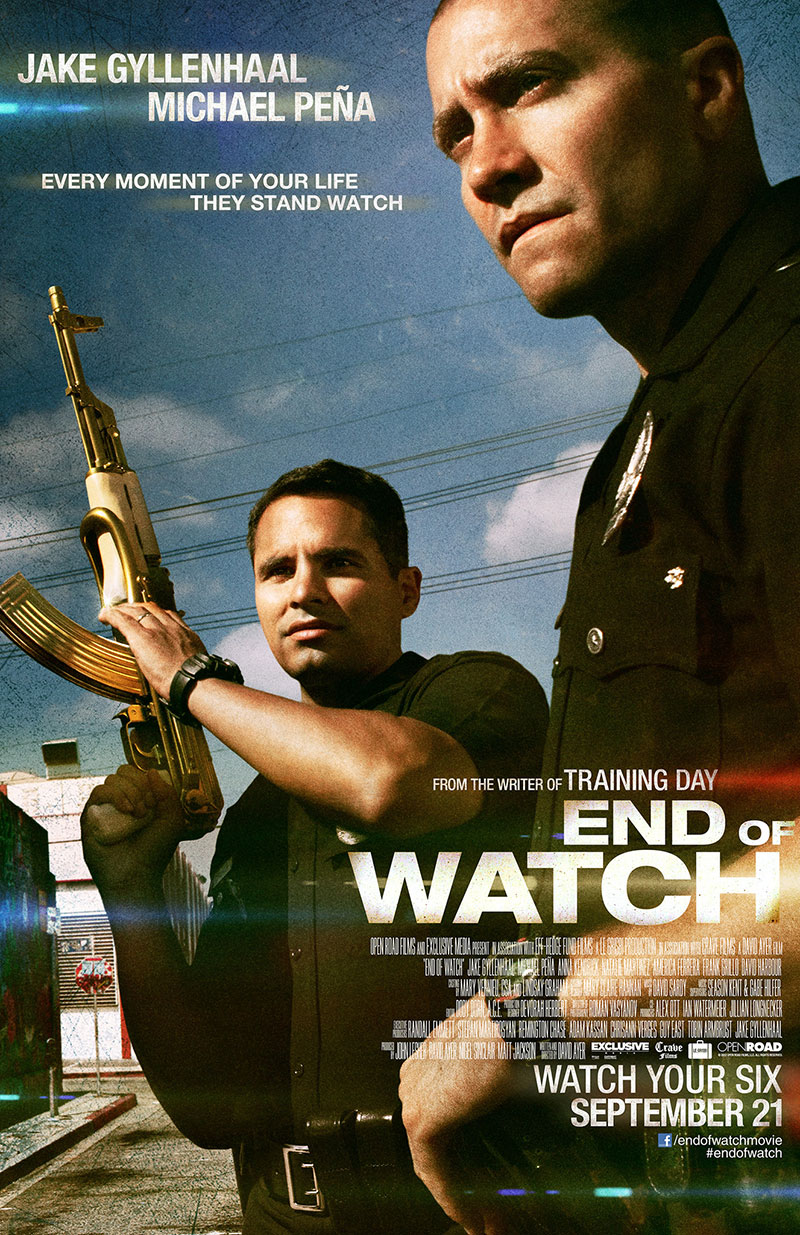 Gritty New York City cop dramas are stylistically different from gritty Los Angeles cop dramas. It’s only partly due to setting. It would be hard for a film to ignore the differences between the coasts, but as far apart as the Eastern Seaboard and SoCal are, geographically and culturally, these differences are not what set cross-continental police flicks and television series apart. Just doing a loose word association, when I think NYC cop drama, my first thought is Law & Order and all of its iterations — police procedurals that follow detectives. After that I drift back to films from the past like The French Connection, Serpico, Fort Apache the Bronx, The Taking of Pelham One Two Three, Across 110th Street, even Bad Lieutenant. These films represent my own personal biases, but they all adhere to a palate of sorts that is broadly representative of New York City cop films.
Across the farmlands, the plains, the mountains and the deserts, Los Angeles has been building its own mythos regarding the LAPD on film. After decades following the cop as superman (think Lethal Weapon, Cobra, etc.), that model looks set to be replaced by episodes of Cops. I’m not joking. Some of the best work regarding LAPD officers of late hasn’t involved huge explosions and guns that never run out of ammo. It hasn’t been the lone detective doggedly pursuing the impossible murder case. It hasn’t been buddy movies. It’s been the uniformed officer. Continue reading “End of Watch”
Dredd
“Let’s finish this.” Really? Still, it’s good. Trust me.
Blink and you would have missed it. Dredd, written by Alex Garland and directed by Pete Travis, went in and out of movie theaters so quickly this fall that by the time I realized it had been released, it was already gone. Maybe it was a failure of marketing, maybe it was a lack of interest in the characters, maybe it was just fatigue after a summer filled with overwrought comic book adaptations which kept viewers away. And, it has to be said, maybe it was the hard ‘R’ rating the film earned. Whatever the reasons, one or a combination of all of these and more, Dredd was a flop. Which is too bad, because it was the best of the comic book films released this year, and one of the best comic book films I’ve ever seen. Continue reading “Dredd”
Runaway Train
1985’s Runaway Train is a very unique film. It’s American made, filmed in the white wastes of Alaska, but in a blind taste test, cinephiles would swear it was a Russian film. The film stock, the cinematography, set designs, costumes, etc., all scream that the film was made on the other side of the Iron Curtain. That’s not by design, but a result of the film being helmed by Andrei Konchalovsky, who, until the 1980s, was a Soviet filmmaker. Continue reading “Runaway Train”
Savages
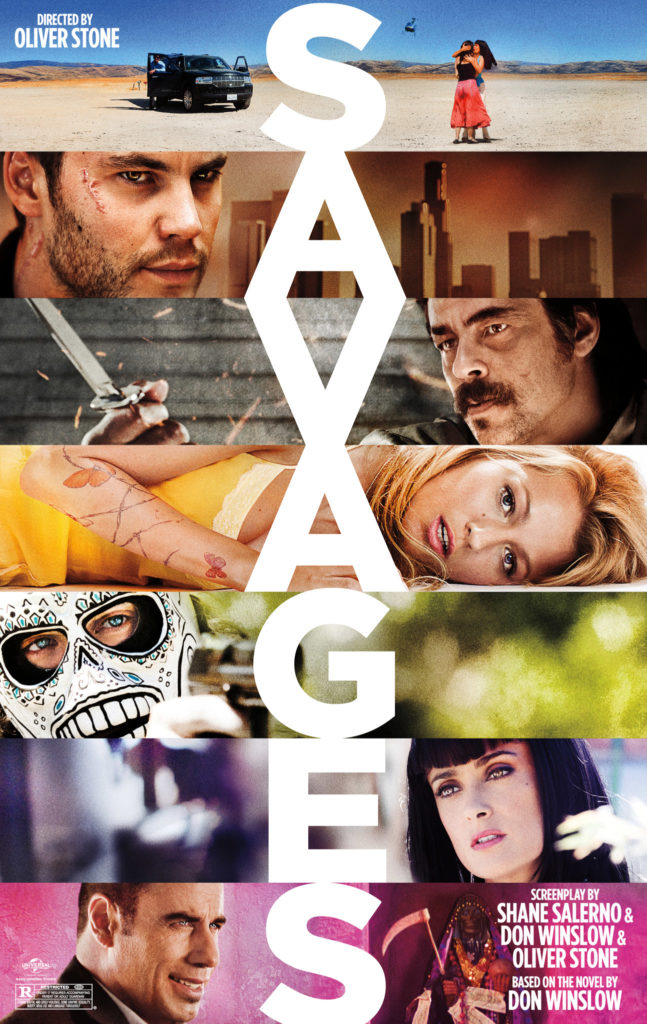 Taylor Kitsch just had a bad year. He starred in three major release films. How can that possibly be bad? The three films were Battleship, John Carter, and Oliver Stone’s latest ham-fisted effort, Savages. Three films, three disappointments, and Mr. Kitsch has suddenly moved into Ryan Reynolds territory as the latest bankable star that turned out to be not so bankable. It isn’t all his fault, though. John Carter was doomed from the start, and Battleship was so awful, a cavalcade of thespians from the Royal Shakespeare Company couldn’t have saved it.
Which leads us to Savages.
Occasionally Oliver Stone gets an itch to make an over-the-top movie full of extreme violence and outrageous criminality. When that has happened in the past, he gave us Natural Born Killers and the screenplay to Scarface. This year it was Savages, adapted from the novel by Don Winslow, which tells the tale of a California airhead and the two drug dealers who love her. Continue reading “Savages”
Dirty Harry
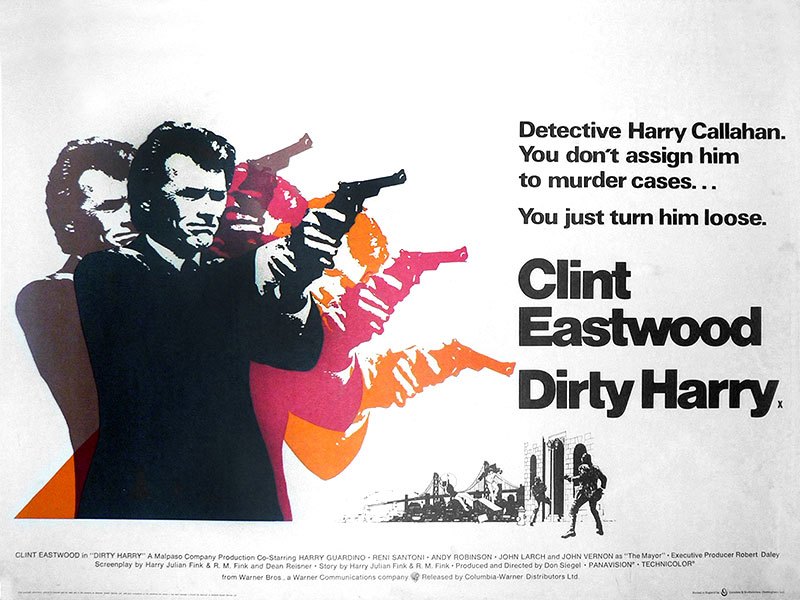 The tough-nosed cop with a disdain for the rules is a staple in film. Always butting heads with desk-bound lieutenants and mayors more concerned with getting reelected than cleaning up the streets, this breed of law enforcement officer has little time for procedure or the niceties of due process. Largely a fabrication of Hollywood, this cop operates in a world where the worse the crime, the more likely the guilty will go free due to the dreaded plot device known as “technicalities.” It’s all the more galling because there is never any doubt to the audience or to the hero that the bad guy is bad. Letting the bad guy go free because his rights were violated is nothing less than a miscarriage of justice, and it’s always left up to the hero cop to right such grievous wrongs. No film comes to mind that explored these ideas more effectively than 1971’s Dirty Harry. Continue reading “Dirty Harry”
The Foam Rubber Wholesalers Convention
 Christopher Nolan has wrapped up his epic interpretation of the Batman saga, and the viewing public has benefited greatly. After two of the most epic and well-made superhero films of all time, and fine films in their own right, the tale comes to an end this summer. Nolan, and his screenwriter brother Jonathan, should be credited with legitimizing and dragging into believability an aged franchise that at times wears its history and legacy as a seventy-year-old burden.
Only the most basic of continuity from the DC Comics characters remain in the Nolan retelling. Ra’s al Ghul? Dead after one film. Joker? One film and done (extenuating circumstances do apply). Two-Face? Dead, and a far cry from the criminal mastermind of the comics. Even Scarecrow, a stalwart of the Rogues Gallery, saw his menace pass with Batman Begins, settling for mere cameo in the subsequent films.
One of the things regular readers of the serialized Batman comics can count on is the lack of finality in any story. Sure, Joker, or Killer Croc, or Zsasz will wreak their havoc upon Gotham City and its inhabitants, but Batman always prevails, and Arkham Asylum welcomes the vanquished villain with open, inadequately secured arms, sure to let their ward escape to challenge the Masked Manhunter again...editors willing. Continue reading “The Foam Rubber Wholesalers Convention”
Mona Lisa
Mona Lisa isn’t a typical British gangster film. Many of the hallmarks are there, to be sure. Gritty London scenery, almost impenetrable accents, and Michael Caine and Bob Hoskins. But many of the things a viewer expects from the plot of a British gangster film are absent. There’s no big heist being planned. There’s no grisly murder to revolve the story around. There’s violence at times, but it isn’t the gratuitous kind. It doesn’t rule the film. When it comes, it’s a necessary outcome of the story. Mona Lisa tells a story wrapped within a recognizable genre, but it uses that genre as a tool to tell the tale of a complex personal relationship. Continue reading “Mona Lisa”
Trancers
Blade Runner was a successful film. It combined science fiction and noir in an unforgettable visual and atmospheric pastiche. It should follow, then, that it would influence later films and also spawn a fair share of cheap imitations. Ladies and gentlemen, I give you Trancers, a b-movie extraordinaire from 1984. Continue reading “Trancers”
Robocop (1987)
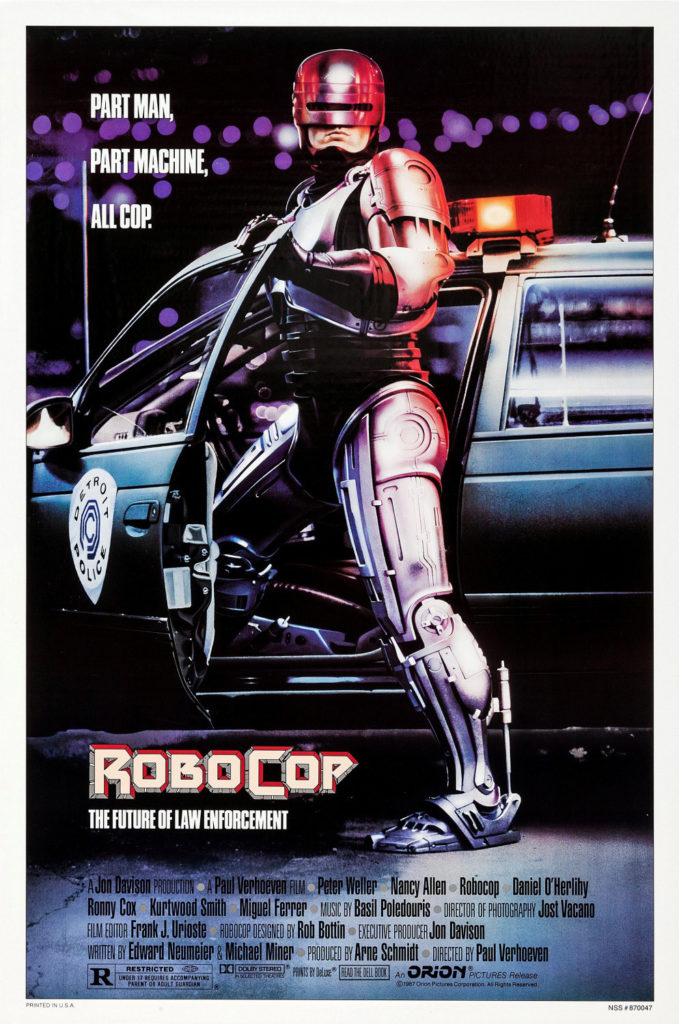 Dystopian future societies are the stuff dreams are made of. They are what grow from the seeds of our own decadence and shallowness. The moral bankruptcy, and sometimes outright horror, of the settings of films like Blade Runner, A Clockwork Orange, THX 1138, Escape from New York, and Soylent Green wouldn’t be possible if writers and directors didn’t look around them and see the lightning speed with which we throw ourselves into unknown futures, sometimes without regard for so many of the present realities which work so well and don’t need change. The ever-present message is that change, sometimes jarring change, is inevitable. Films that look to the future warily revolve around placing the viewer in the role of Rip Van Winkle. When the theater lights dim, the familiar world of today dissolves into the freak show of tomorrow. The overriding questions always being: Why are the people onscreen comfortable with this? Why doesn’t everybody see how wrong things are?
Simply put, because that’s how things in the future work. People in the future grow up among the bizarre, things we wouldn’t recognize, as though these were the normal conditions of existence, rather than a manufactured reality that mankind has created for itself. The irony is, of course, that we, in real life, away from the fantasies of Hollywood, live like these silver screen wraiths, embracing the fast pace of technological advance, throwing off the yoke of millennia of human history to embrace the dictates of the electronic age. Implicit in films that depict the future is that civilizational advance is a given, destroying the ways and mores of the past, creating something unrecognizable to those who weren’t witness. This resonates because that is exactly how our ancestors would feel would they awake in today’s world. Continue reading “Robocop (1987)”