
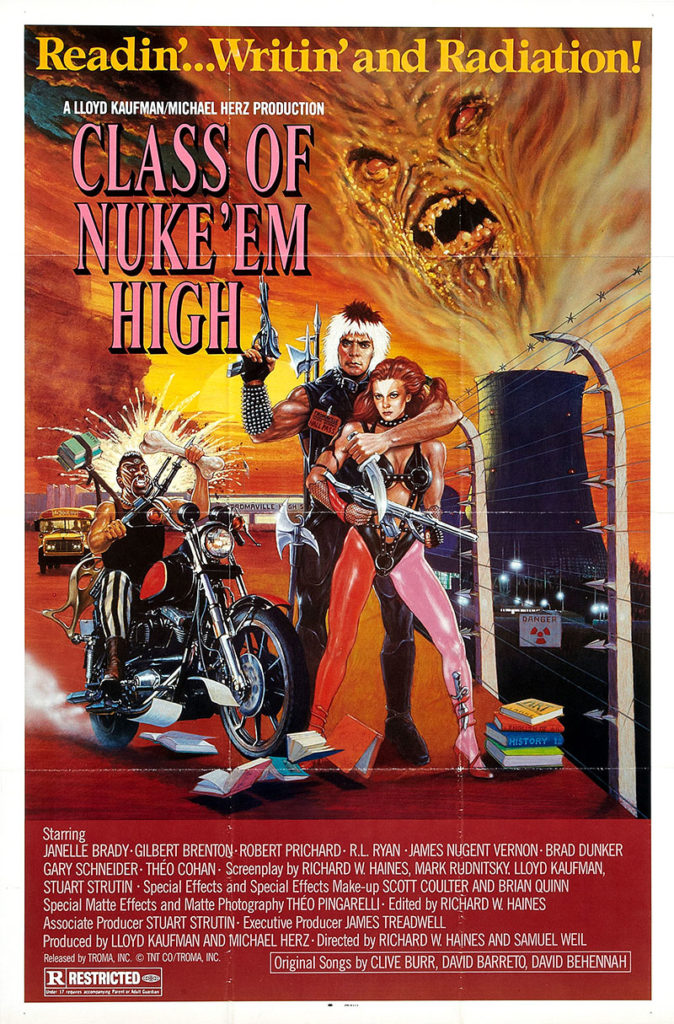
 What a shitty movie. From Troma Entertainment, a production company well-versed in churning out b-movie fare (most famously the Toxic Avenger series of films and its spinoffs), Class of Nuke ‘Em High is self-aware schlock. From the opening scene to the end, the filmmakers never miss a chance to remind the viewer that what they are watching is not meant to be taken seriously. But the way they choose to draw attention to this fact, with overwrought characters and performances, only serves to make the film feel forced. It revels in cheapness, and this would be a good thing, if only they weren’t trying so hard. At every step of the film, Troma seeks to establish its brand, reveling in its ineptness at putting together something that is watchable.
The film has a strong beginning. After an opening shot purposefully evocative of Troma’s production logo, the scene shifts to the fictional town of Tromaville, New Jersey, where an accident at a nuclear power plant has leaked radioactive goo into the high school next door. A hapless student is exposed to the contaminant when he drinks from a water fountain before class, and his transformation from stereotypical 80s film nerd to smoking corpse is hilarious. But in that scene is a first glimpse of the film’s downfall. Most of the ensemble cast is present, and all exist, like the poor victim, as caricatures of the diverse collection of jocks, losers, horndogs, and punks that populate the banal visions of high school typical of so many films from the 50s to today. The problem is, there isn’t a straight man among the bunch to balance things out. Continue reading “Class of Nuke ‘Em High”
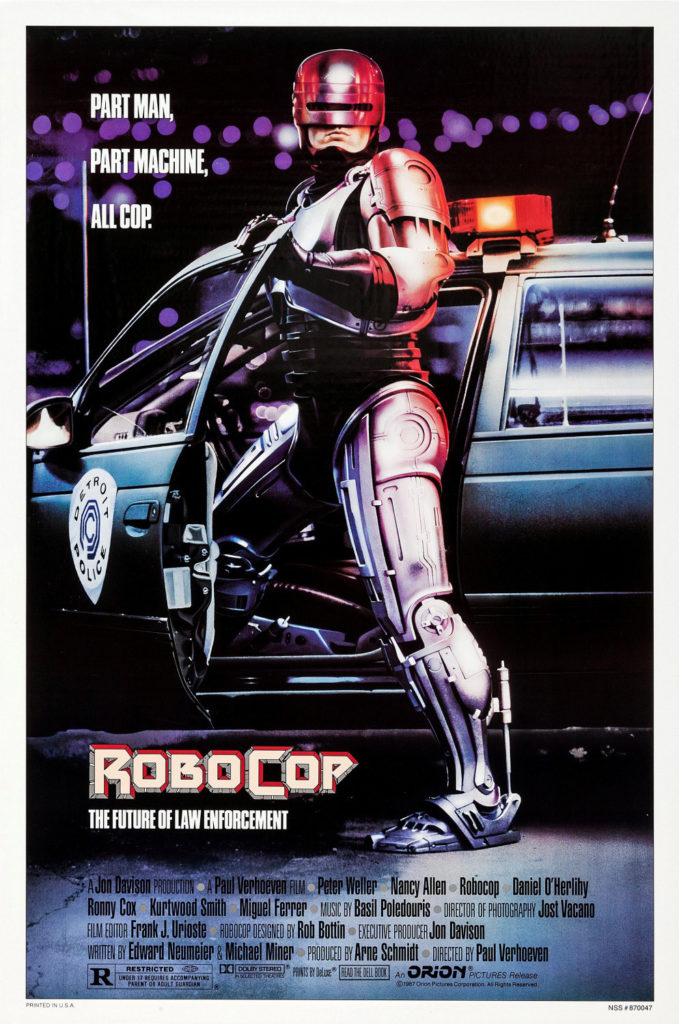 Dystopian future societies are the stuff dreams are made of. They are what grow from the seeds of our own decadence and shallowness. The moral bankruptcy, and sometimes outright horror, of the settings of films like Blade Runner, A Clockwork Orange, THX 1138, Escape from New York, and Soylent Green wouldn’t be possible if writers and directors didn’t look around them and see the lightning speed with which we throw ourselves into unknown futures, sometimes without regard for so many of the present realities which work so well and don’t need change. The ever-present message is that change, sometimes jarring change, is inevitable. Films that look to the future warily revolve around placing the viewer in the role of Rip Van Winkle. When the theater lights dim, the familiar world of today dissolves into the freak show of tomorrow. The overriding questions always being: Why are the people onscreen comfortable with this? Why doesn’t everybody see how wrong things are?
 The three films adapted from Richard Matheson’s 1954 novel I Am Legend vary widely in scope, story, and distance from the original source material. They are all shaky and mostly forgettable, but The Omega Man maintains a special place in cinema as one of star Charlton Heston’s many 1970s forays into post-apocalyptic science fiction. For that, it is the most interesting of the three adaptations, if not the best, edging The Last Man on Earth by a close margin.