
 Man vs. nature, and by extension, man vs. his own nature. It’s not an uncommon theme in film. Usually it involves the breakdown of a group in an isolated environment, becoming feral, members desperately trying to maintain their humanity. Director and screenwriter Joe Carnahan’s The Grey dispenses with much of the metaphor and instead keeps things simple. Mere survival is the theme here, pitting a group of humans against a pack of wolves.
Set in the Alaskan wilderness, The Grey tells the story of a group of oil industry roughnecks who survive a plane crash on a mountain far away from civilization. Not long after the seven survivors organize themselves enough to get a life-saving fire burning, they discover they are being stalked by wolves. The wolves don’t seem to be interested in hunting the men for food. Rather, they seem intent on just killing them for being in the wrong place.
Led by the grim Ottway (Liam Neeson), a sniper employed by the oil company to protect the roughnecks from wolf attacks back at the camp the men originated from, the film follows the men as they try to escape from the wolves’ territory, their numbers whittled down throughout the course of the film. Continue reading “The Grey”
 October has come again. It being the month of Halloween, we at Missile Test choose to celebrate by watching and reviewing horror films. Ah, blood. There just can’t be enough in October. Today’s selection has plenty of it, even though it’s mostly green. But what the hell, it’s all in fun.
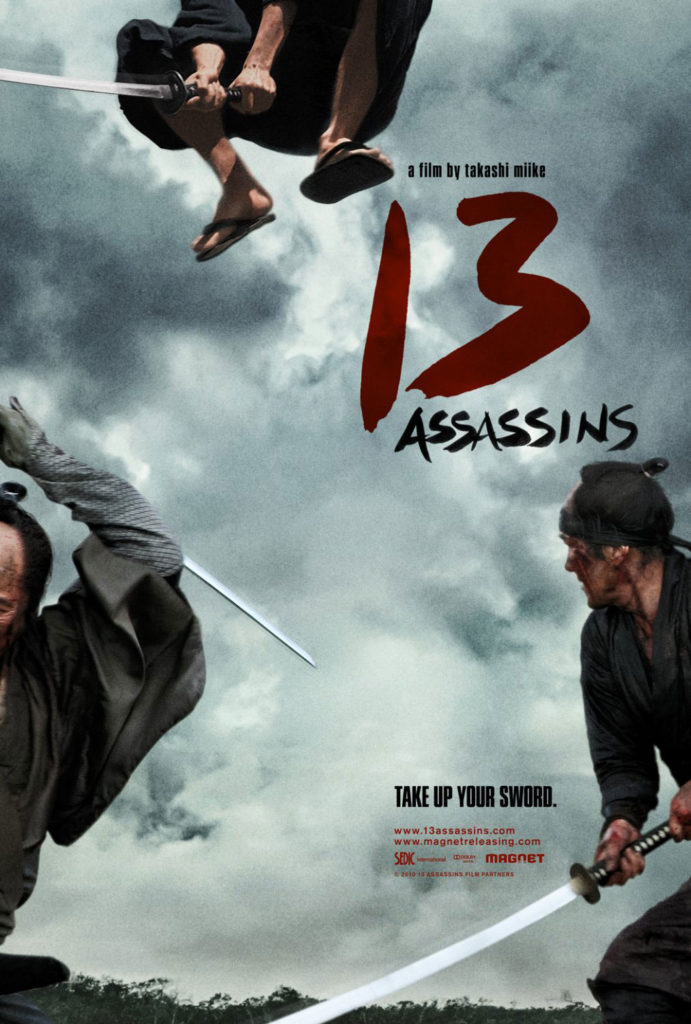 Three historical periods in Japan are among the most interesting and compelling in the annals of human civilization. The Sengoku period, also known as the Warring States period, comprised the height of feudal conflict from the 15th century to the early 17th century, culminating in the unification of Japan under the Tokugawa Shogunate in 1603. The new era of peace which followed, the Edo period, lasted until the Shogunate collapsed in the wake of internal and external pressures for Japan to end its forced isolation and open its shores to the modern world in the 1860s. What followed was the Meiji period, when the emperor was restored to power, and Japan, through numerous fits and starts, became the empire that was finally defeated by the Allies in World War II.